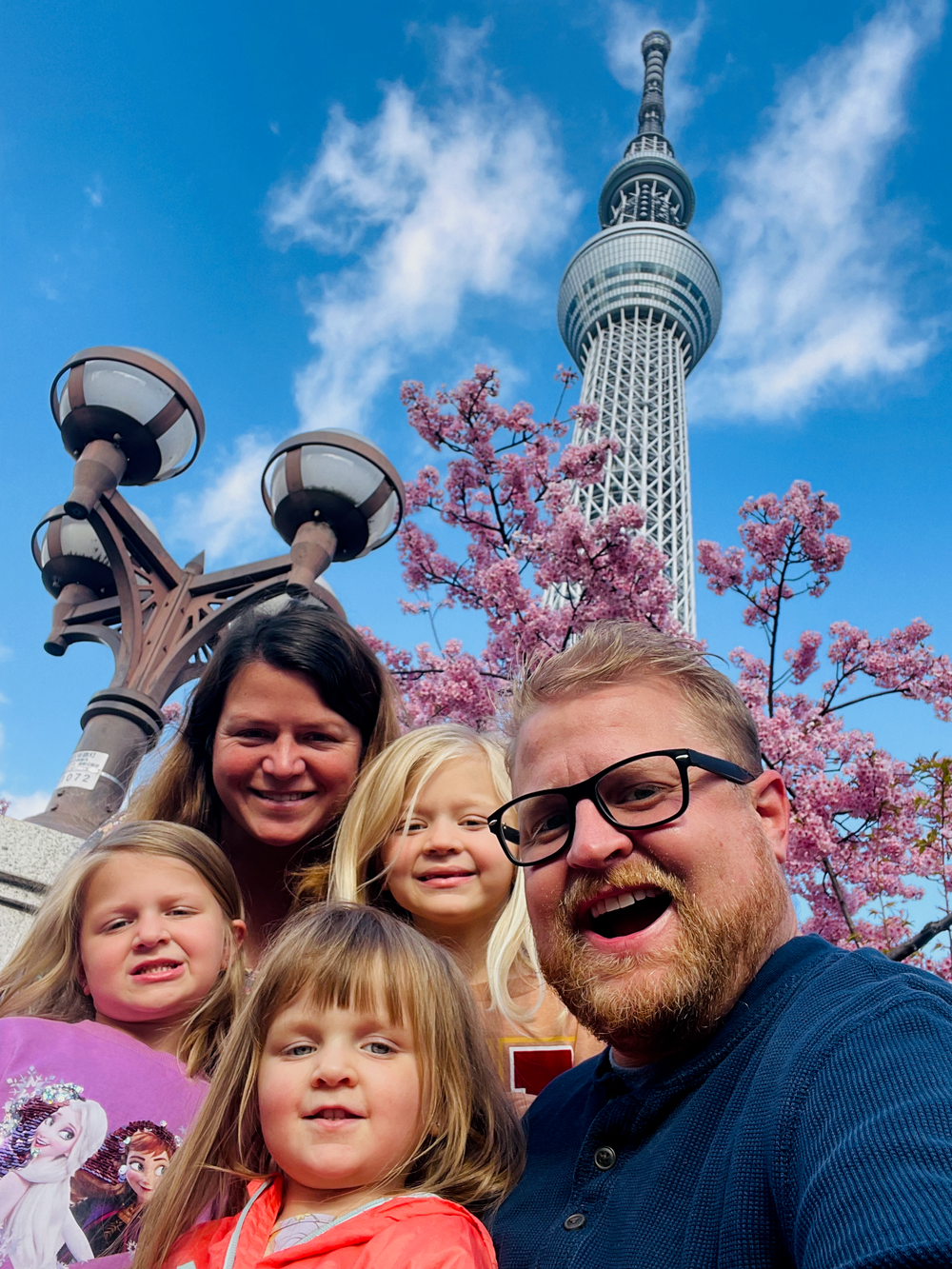

We have spent 325 days in Japan across 13 separate trips - Tokyo, Osaka, Kyoto, Hiroshima, Fukuoka, Hakone, Kawasaki, Yokohama, and now Osaka again as a base while we're here for cherry blossom season. We've booked more activities in this country than anywhere else we've been, and the platform we keep coming back to is Klook. Not because it's the only option, but because after years of testing the alternatives, it's the one that's never let us down at a gate.
This is not a list of every activity Klook offers in Japan. It's the ones we've actually used, what we paid, what surprised us, and a few things we'd do differently. Use code ADAMANDLINDSKLOOK at checkout for a discount - that's the current code, the old ADAMANDLINDS is expired on Klook so make sure you're using the right one.
Why Klook works in Japan specifically
Japan is a country that rewards preparation and punishes improvisation. This is not a complaint - it's the reason things run so well here - but it does mean that showing up somewhere without a booking is a gamble you'll lose more often than not. teamLab Planets has a timed-entry system. Super Nintendo World at USJ has an Area Timed Entry Ticket system layered on top of your park ticket. Some of the better ryokans fill up months ahead. Tokyo DisneySea on a Saturday in October is not a walk-up proposition for five people.
Klook's practical advantage is that it puts your tickets on your phone as QR codes, which work offline. This matters more than it sounds. Japan's mobile data situation has improved enormously since we first arrived in 2022, but you're still going to have moments - deep in a station basement, queuing at a gate in a 4G dead spot - where you'll want your tickets accessible without a signal. Download them to the app the night before. We've never had a Klook QR code rejected at a gate in Japan. Not once across 13 trips.
The pricing advantage varies by activity. On some things - teamLab Planets, USJ Studio Pass - Klook consistently undercuts the gate or matches it with extras included. On others, the main benefit is convenience rather than a big discount. Either way, we've never paid more through Klook than we would have at the door.
teamLab Planets Tokyo: the one we keep going back to
We've done teamLab Planets twice. The first time was June 2024 on our fifth Japan trip. We'd been putting it off because we'd heard it was crowded and overhyped. Both things are true and neither one matters once you're inside.
The experience starts before you enter - you're barefoot from the moment you walk in, which immediately changes how you move through the space. The first room is a shallow reflective pool, maybe ankle-deep, with a mirrored ceiling, and the lights and colour shift as you and everyone around you move through it. With three kids aged between six and twelve at the time, the dynamic was chaotic and perfect. Harper, who was six, stood absolutely still in the middle of the pool for what felt like two minutes, just watching the lights respond to other people moving around her. Lily, then twelve, immediately started testing the edges of the sensor range. Cora documented everything on her camera. We all came out having had completely different experiences of the same room.
The second visit, in 2024, was deliberately calmer - we went on a weekday at opening time with a 10am timed entry slot. The difference in crowd density was significant. If you can book a weekday morning slot, do it.

Timed entry is mandatory and slots sell out. During cherry blossom season and summer school holidays, you're looking at two to three weeks lead time minimum. We've seen people turned away at the gate without a booking on a Saturday afternoon in June - the venue doesn't do walk-ins when it's at capacity, which is frequently. Book through Klook with code ADAMANDLINDSKLOOK:
- teamLab Planets TOKYO Ticket on Klook - from around $24 USD
Getting there: Toyosu Station on the Tokyo Metro Yurakucho Line, or Shin-Toyosu on the Yurikamome. It's a short walk from either. The venue itself is compact compared to Borderless - you move through it in 60-90 minutes - which means a shorter slot works well if you're combining it with other Toyosu or waterfront activities on the same day.
We have a full breakdown of teamLab Planets vs teamLab Borderless on the blog if you're trying to choose. The short version: they are genuinely different experiences and the choice depends more on your travel style than on which one is "better".
Universal Studios Japan: what we learned between visit one and visit two
We've been to USJ twice. First visit, November 2022, early in our Japan travels when we were still figuring out how the park systems worked. We had the Studio Pass, no Express Pass, arrived at 9:30am thinking we were early. The Super Nintendo World queue already had a 90-minute wait and the Area Timed Entry Tickets for the afternoon were gone by 10am. We rode three things and ate a lot of Butterbeer. It was fine. It was not the day we'd planned.
Second visit, March 2026. We bought the Express Pass. The difference was not subtle. We were in Super Nintendo World within 20 minutes of the park opening, completed the interactive wristband activities with the kids, rode Yoshi's Adventure twice, had lunch in Toad's Cafe, and still had an afternoon left for the rest of the park. The girls posed with every Hello Kitty plush toy they could find on the way out.

The practical notes on USJ tickets through Klook:
- Universal Studios Japan Studio Pass on Klook - standard park entry, direct QR code at gate
- USJ Express Pass on Klook - from around $62 USD, multiple tiers covering different combinations of rides
One thing we didn't know on visit one: download the official USJ app before you arrive. Area Timed Entry Tickets for Super Nintendo World are distributed through the app and go fast after park opening - some days they're gone within 30 minutes. The Express Pass bypasses the Area Timed Entry system entirely, which is a big part of what you're paying for. If Super Nintendo World is the reason you're going, it's worth the cost. If you're there for Harry Potter and Jurassic Park and are happy to queue, the standard pass is fine.
Tokyo Skytree: the view and the queue problem
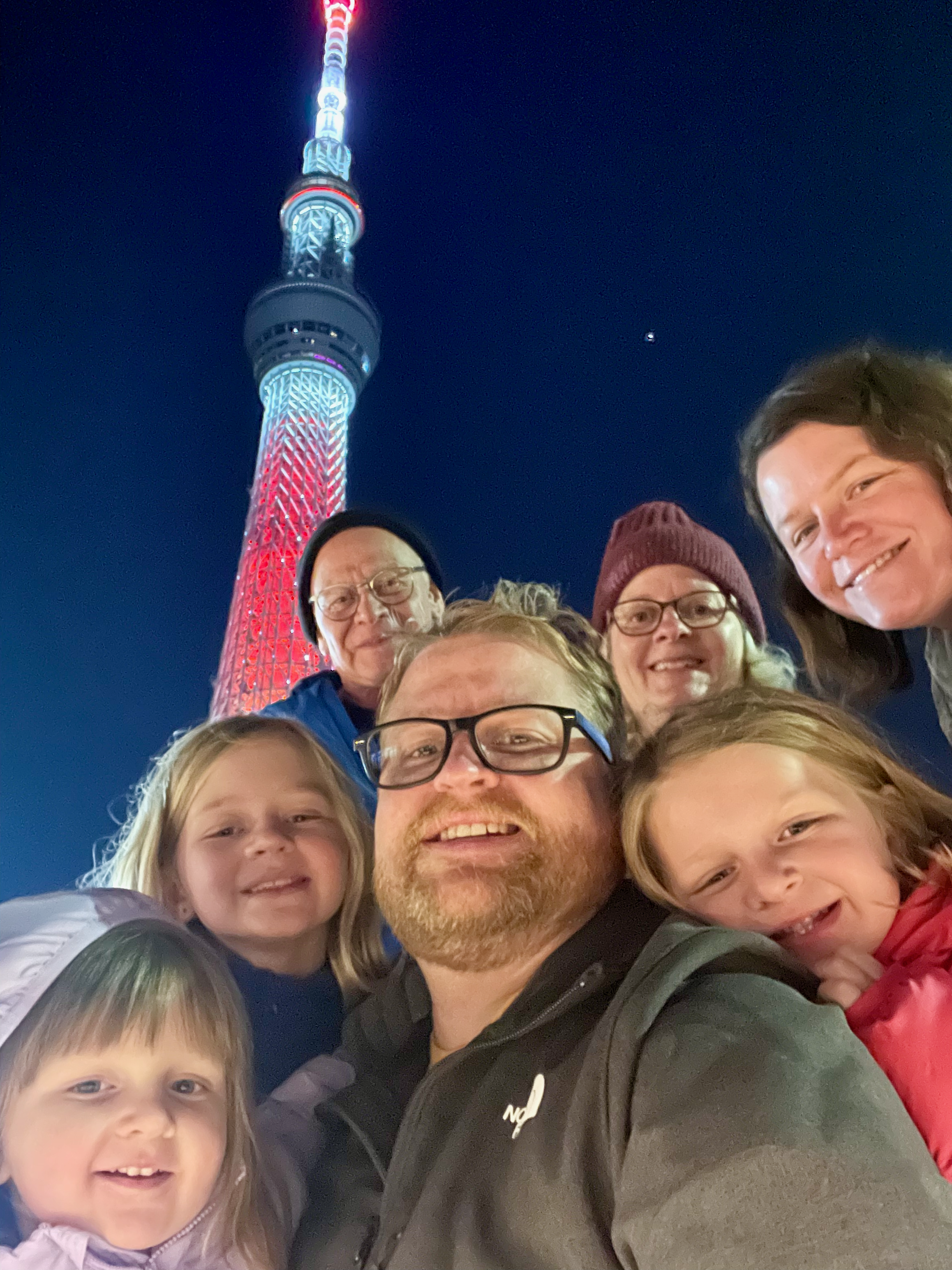
We've been up the Skytree three times now, including once with Adam's parents when they visited us in Tokyo in November 2023. His mum had declared no interest in city views before we went. She stood at the glass floor section on the Tembo Galleria for fifteen minutes. On a clear day you can see Fuji from up there - not a hint of it, an actual mountain - and the scale of Tokyo spreading in every direction doesn't fully land until you're at 450 metres watching it.
The ground-floor ticket queue at Skytree is genuinely long on busy days. It moves slowly because the process involves selecting your time slot and floor combination at the desk, which takes a minute per person in front of you. The Klook QR code puts you in a separate queue that skips most of this. Worth the small price difference versus buying at the gate, especially if you have kids who are already at their patience limit after the train journey to Asakusa.
Book Tokyo Skytree tickets
TOKYO SKYTREE Ticket on Klook from $13 USDTiming tip: late afternoon on a clear day gets you the daylight cityscape and, if you time it right, the transition to night lights without needing two separate visits. We did this accidentally in 2023 and it was one of the better unplanned moments of that trip.
The Klook Pass Greater Tokyo: when it works and when it doesn't
The pass lets you pick 2 to 7 attractions from a list of 30+, with savings of up to 48% depending on the combination. Standard inclusions include Skytree, Aqua Park Shinagawa, Sanrio Puroland, and a dozen others. Premium add-ons - available at higher tiers - include teamLab Borderless, Warner Bros Studio Tour, Tokyo Disney parks, and Mount Fuji day trips.
We've used it. The honest answer on whether it's worth it is: run the numbers for your specific list before you buy. The pass pays off when your selections include two or more premium attractions. It's less convincing if your list is mostly mid-tier spots you could buy individually for less than the pass price.
| Pass Size | Picks | From Price | Best For |
|---|---|---|---|
| 2-Choice | Pick 2 | ~$42 USD | Short Tokyo stays, 2-3 days |
| 5-Choice | Pick 5 | ~$95 USD | Full week, mix of standard + premium |
| 7-Choice Premium | Pick 7 | ~$160+ USD | Heavy itineraries including Disney or Warner |
The pass activates on your first redemption and gives you 90 days to use the rest, so if you're doing Tokyo in two separate legs of a longer Japan trip, that works in your favour. Our full Klook Pass Greater Tokyo guide runs through the best combinations we've tested.
Tokyo Disneyland and DisneySea
We've done Tokyo Disneyland with the kids. DisneySea remains on the list - we keep saying next trip and then something else fills the day. What I can tell you from Disneyland is that the operational standard at Tokyo Disney Resort is the highest we've encountered in any theme park anywhere. Things run on time. The queues move. The food is better than it has any right to be. Staff are attentive in a way that doesn't feel performative.
Buy on Klook rather than navigating the Disney Resort Japan website in English. Same ticket, same QR code, cleaner booking experience if you're not reading Japanese.
- Tokyo Disney Resort - Disneyland and DisneySea Tickets on Klook - from around $50 USD
Our complete Tokyo Disney booking guide covers Premier Access, what it does to your day, and how to approach it with kids across different age groups.
Hakone and Mount Fuji: the independent route vs the guided tour
We've done Hakone independently twice. The Hakone Freepass is genuinely excellent value if you're planning a full day and want to use the ropeway, the pirate ship on Lake Ashi, and the local buses without thinking about individual fares. On a clear November morning we crossed the lake with Fuji filling the entire far end of the view, which is the kind of thing that makes you feel slightly ridiculous for not coming sooner.
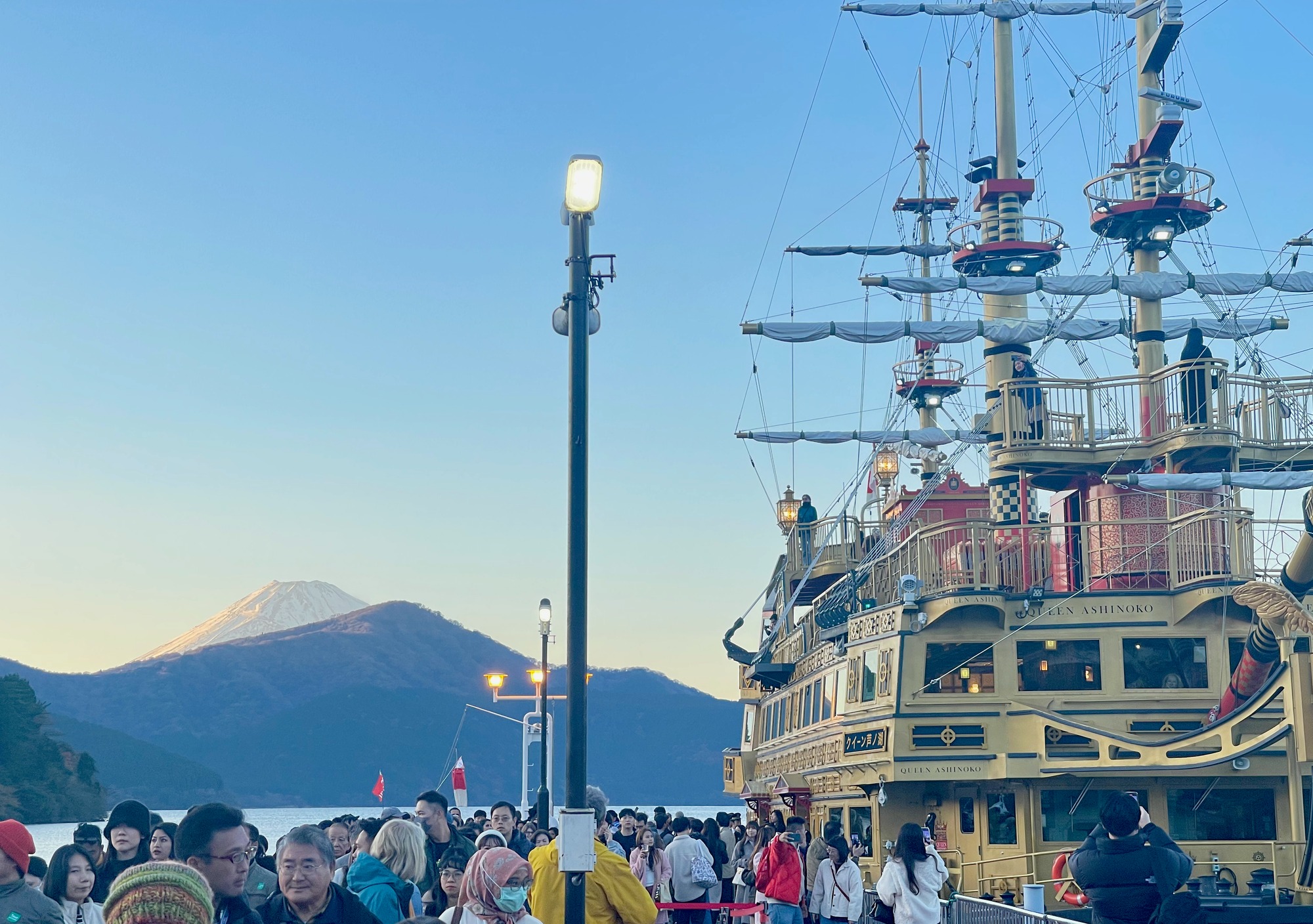
The catch with the independent route: Fuji is a shy mountain. Cloud cover is the norm, not the exception. We've had one perfect clear day out of two visits. If you're on a tight itinerary and Fuji visibility is the priority, the guided day tours from Tokyo at least get you to multiple viewpoints and maximise your chances with better timing knowledge than we had on our first attempt.
- Hakone Freepass on Klook - around $45 USD, covers ropeway, pirate ship, buses, trains
- Mount Fuji Famous Spots Day Trip from Tokyo on Klook - guided option, includes Kawaguchiko and Oshino Hakkai
Shibuya Sky: the observation deck we recommend over the Skytree for first-timers
The Skytree is taller and the view is bigger. Shibuya Sky is better. That's a subjective call but we've taken a dozen people to both and Shibuya Sky consistently produces the stronger reaction, because you're standing on an open-air rooftop directly above one of the most recognisable intersections on earth and the sense of scale - all those towers, all those lights, the crossing 230 metres below - lands differently than altitude alone.
Go at sunset if you can. Book in advance because the timed slots fill up, especially on weekends.
- SHIBUYA SKY Ticket on Klook - from around $17 USD
Kimono rental in Asakusa
We've done this twice with the kids, and it's one of those activities that reads like a tourist cliche until you're actually doing it and the backstreets behind Senso-ji are half-empty at 9am and everyone's moving slowly because the sandals make you walk differently and the whole morning takes on a particular quality that's hard to manufacture through any other means.
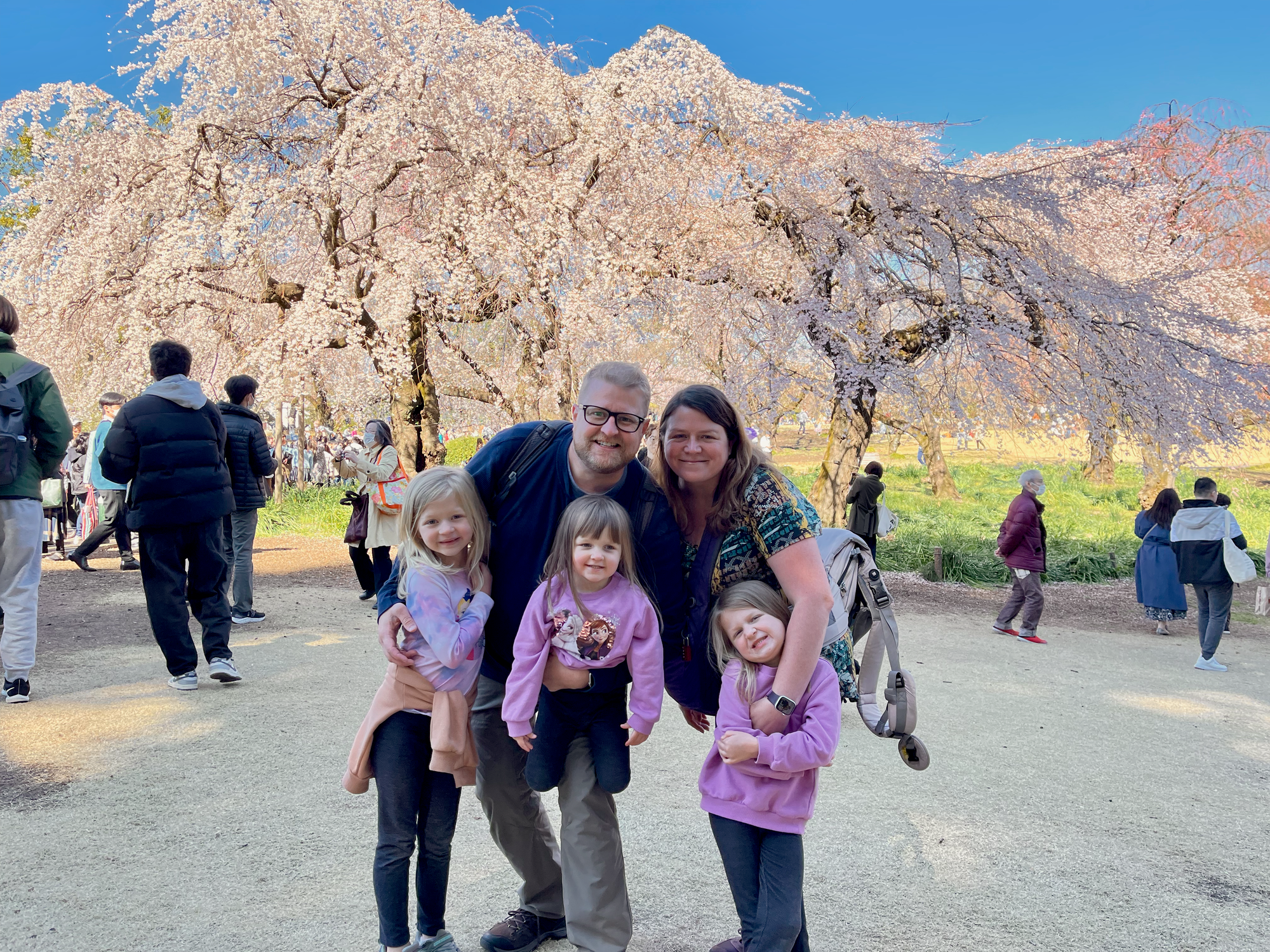
The early slot is worth it specifically because the Nakamise shopping street leading to the temple is congested by 10:30am on most days and overwhelming by noon. If you're dressed in a yukata and trying to move slowly and enjoy it, the crowds work against you. Book the first slot available - usually 9am - and you get the temple and the surrounding streets before the tour buses arrive.
- Tokyo Kimono Rental Experience (Asakusa) on Klook - from around $18 USD
- Kimono Miyabi Asakusa on Klook - alternative option, similar price
Getting into and around Japan: the transport tickets that matter
Japan's airport connections and intercity transport are easy to book on Klook and make a real difference to the arrival and departure experience. These are the ones we use:
Narita to Tokyo - Keisei Skyliner. Fast, direct, reserved seat. The journey is about 40 minutes to Ueno, with one stop at Nippori. After a long-haul flight with bags and three kids, the fact that you have a guaranteed seat and don't need to navigate a crowded commuter train is worth everything the ticket costs. We've taken the Skyliner six times now and have never had a problem.
Kansai International to Osaka - JR Haruka Express. Direct to Osaka, Kyoto, and Nara stations. Runs every 30 minutes, reserved seats, and the connection from KIX is fast enough that we've landed at 2pm and been checked into accommodation in Namba by 4pm with kids, luggage, and a stop for convenience store onigiri.
Osaka to Namba - Nankai Rapi:t. If you're flying into KIX and heading for Namba specifically, the Rapi:t is the sleeker option - the exterior looks like something out of a 1980s sci-fi film and the kids love it for exactly that reason. Faster than the local trains, dedicated luggage space.
Kansai region pass. If you're spending more than three days across the Osaka, Kyoto, Nara corridor, the Kansai Thru Pass covers buses and private railways that the JR Pass doesn't touch. We used it on our first Kansai trip in 2022 and it simplified the logistics considerably.
- Kansai Railway Pass on Klook - around $36 USD for 2 days
We have a full guide to buying Shinkansen tickets on Klook on the blog - it covers when individual tickets beat a pass, how the seat reservation system works, and the one booking mistake we made that cost us an hour at Tokyo Station.
A few things that surprised us about using Klook in Japan
After 325 days and more bookings than we can accurately count, a few observations that don't fit neatly into individual activity sections:
Refunds work. We've had to cancel twice - once when a kid was sick the morning of a booking, once when a typhoon effectively closed central Tokyo for 18 hours. Both were handled quickly through the app with no argument. Japan attractions through Klook tend to have reasonable cancellation windows; always check the specific policy before booking but our experience has been positive.
The Klook app handles multiple trips well. We've had bookings for Tokyo and Osaka on the same trip, active at the same time, and the app keeps them organised without confusion. Filter by date and you get that day's relevant QR codes up top.
Some things don't need Klook. Senso-ji temple is free. Shinjuku Gyoen costs a few hundred yen at the gate and there's never a meaningful queue. The Philosopher's Path in Kyoto, the Fushimi Inari torii gates, the deer at Nara - none of these need advance booking and all of them are better done early in the morning before the guided tour groups arrive. Klook is for the things that sell out or are significantly cheaper pre-booked. Not everything in Japan needs to be managed.
Data matters as much as tickets. Klook QR codes work offline once downloaded but Japan navigation - train lines, Google Maps, reading menus, figuring out which exit of Shinjuku Station you need (there are 50 of them) - requires data constantly. We use a Holafly Plans eSIM for Japan - unlimited data, one eSIM that covers Japan and 160+ other destinations, which works well given how often we're moving between countries.
How to use the Klook discount code
The code is ADAMANDLINDSKLOOK. Enter it in the promo code field at checkout. The old code ADAMANDLINDS no longer works on Klook - this is the current one.
Klook Discount Code
Use code ADAMANDLINDSKLOOK for discounts on Klook activities.
Most standard Japan activity bookings accept it. Exceptions include some flash sales and promotional bundles where Klook explicitly excludes promo codes - the page will note this at checkout. When in doubt, add the activity to your cart, apply the code, and see what happens before completing payment.
Frequently asked questions about Klook in Japan
Is Klook legit and safe to use in Japan?
Yes. We've used Klook for well over a hundred Japan bookings across 325 days in the country. Tickets are delivered as QR codes through the Klook app and accepted at venue gates exactly the same as a booking made directly. We have not had a single rejection.
What is the current Klook discount code for Japan?
The current code is ADAMANDLINDSKLOOK. The older ADAMANDLINDS code is expired on Klook - make sure you're using the updated one at checkout.
Do you need to pre-book teamLab Planets on Klook?
Yes, and the earlier the better. teamLab Planets uses mandatory timed-entry ticketing and sells out significantly in advance during peak periods - cherry blossom season, Golden Week, summer holidays. Walk-up tickets are not available when the venue is at capacity, which is often. Book at least a week ahead, two weeks during peak season.
Is the USJ Express Pass worth buying through Klook?
If Super Nintendo World or the Harry Potter area is your priority and you have one day at the park, yes. Standard entry queues for those zones can run 90-120 minutes on busy days. The Express Pass is expensive but it converts what would be a frustrating day into a good one. We learned this the hard way on our first USJ visit before we knew better.
Is the Klook Pass Greater Tokyo worth it?
It depends entirely on which attractions are on your list. Run the numbers: add up the individual ticket prices for the attractions you actually want, then compare to the pass price for the tier that covers them. If you have two or more premium inclusions, the pass almost always wins. If your list is mostly mid-tier standard attractions, buying individually is often cheaper.
Can you use Klook tickets offline in Japan?
Yes. Download your tickets to the Klook app before leaving your accommodation and the QR codes are accessible without any data connection. We always do this the night before - it takes 30 seconds and removes one potential problem from the day.
This post contains affiliate links to Klook. If you book through our links, we may earn a small commission at no extra cost to you - and code ADAMANDLINDSKLOOK saves you money at checkout too. We also partner with Holafly for eSIM coverage; if you purchase through our Holafly links, we earn a commission.