
I got my first pair of Zenni glasses sometime around 2012, back when ordering prescription eyewear off the internet felt like a slightly reckless thing to do. The frames cost less than the sandwich I ate while filling out the order form. They arrived, they worked, and I have not paid a brick-and-mortar optical shop full price for glasses since.
That is thirteen years of buying glasses from a website, across a house we owned, a house we sold, and now four years of not having a house at all. The glasses I am wearing while I type this were ordered from a Zenni cart and shipped to a relative in the United States, who then mailed them onward to wherever we happened to be. They have been on a transatlantic crossing, through Lapland in January, and to the beach here in Da Nang. They cost about thirty dollars.
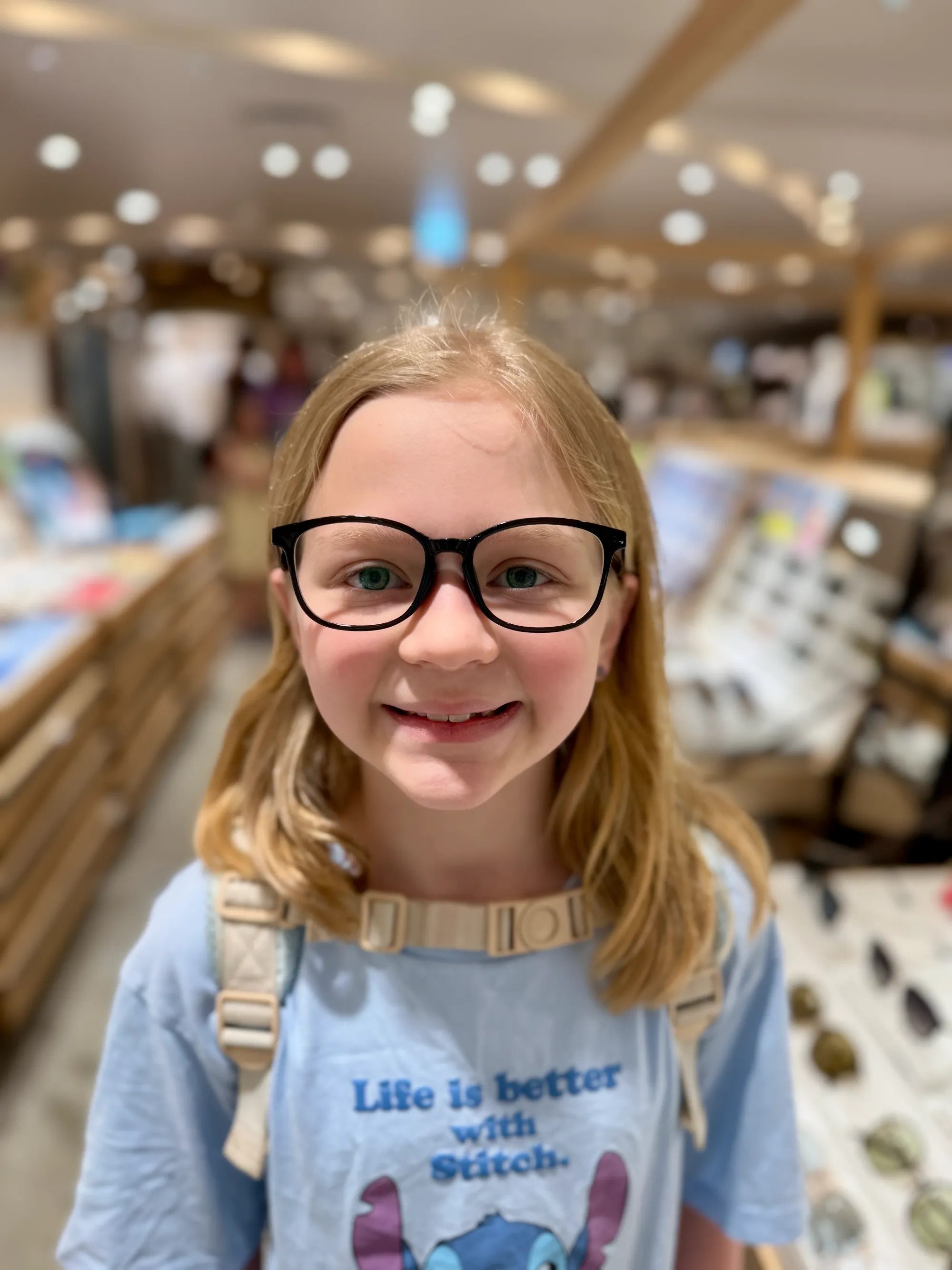
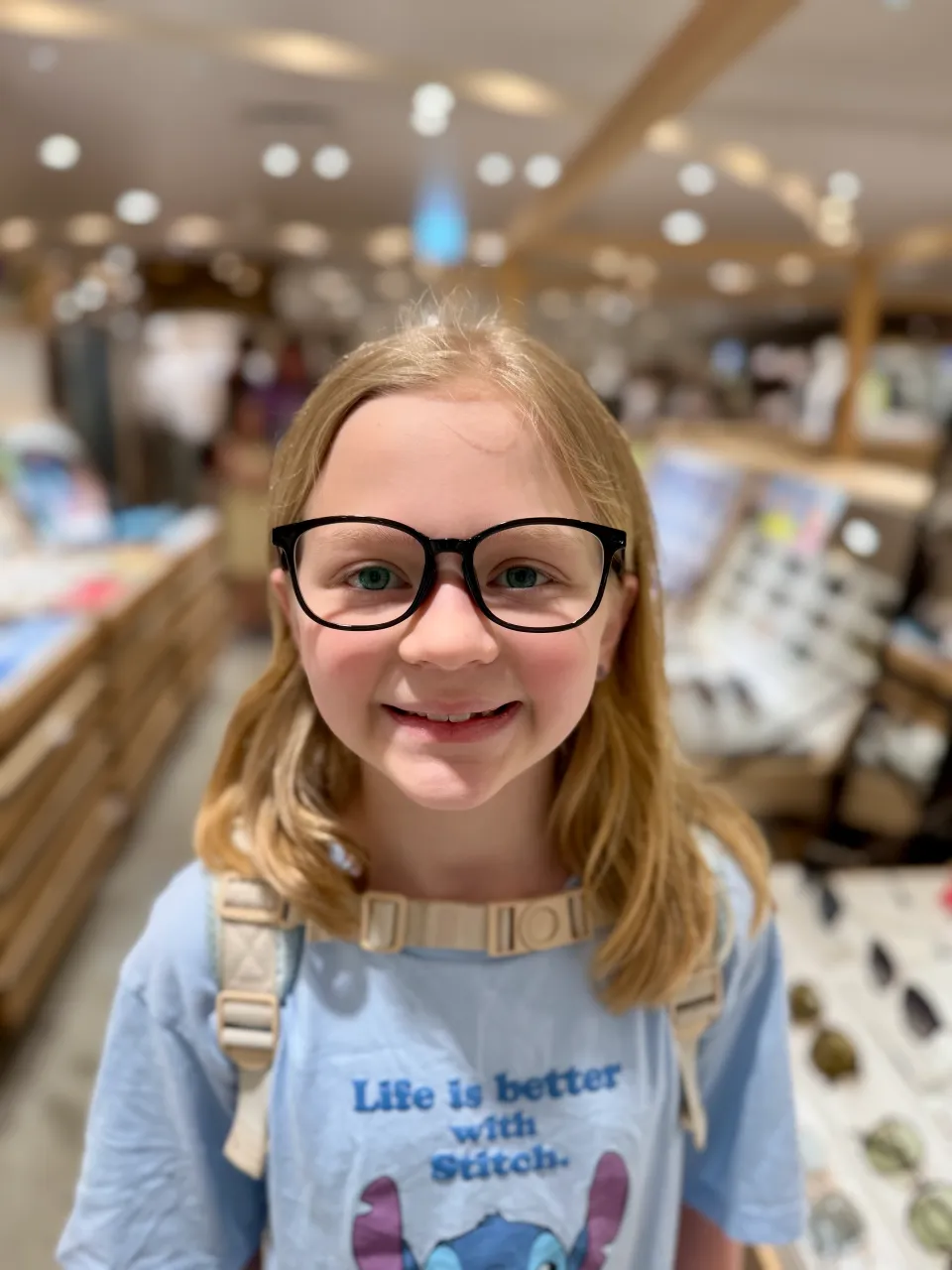
Now our oldest, Lily, has reached the age where the eye chart stopped cooperating. She is starting to squint at things across the room, which means her first pair of glasses is about to become a Zenni order too. So this felt like the right moment to write down what I actually know about buying glasses this way, after more than a decade of doing it.

Why a website beats the optical shop, especially for us
The pitch for ordering glasses online is usually framed around price, and the price is genuinely the headline. A complete pair of single-vision prescription glasses at Zenni starts at $6.95, and most of what I have bought over the years has landed somewhere between $20 and $40 once I add the lens coatings I want. Compare that to the $200-plus I used to hand over at a shop for one pair and the math stops being a conversation.
But price is not actually why I kept coming back. I kept coming back because I am bad at owning physical objects carefully, and glasses are physical objects that get sat on, dropped on tile, and left on aeroplanes. When a $30 pair gets crushed in a backpack somewhere between Bangkok and Taipei, I order a replacement from my phone and move on. When a $250 pair gets crushed, it ruins a week. Cheap glasses are not just cheaper, they are lower stakes, and lower stakes is the entire emotional point of full-time travel logistics.
The other thing nobody tells you: I now own more than one pair. For most of my pre-Zenni life I had a single pair of glasses because a single pair was all I could justify. Now I have a regular pair, a backup pair, and a pair with Blokz blue light filtering that I wear for the long editing sessions when I am cutting together a video. That kind of redundancy is normal at Zenni prices and absurd at optical-shop prices.
What you need before you order
You need two things, and only two things, to order glasses online. The first is your prescription. The second is your pupillary distance, the measurement in millimeters between the centers of your pupils. That second number is the one optical shops are mysteriously reluctant to write on your prescription, because it is the number that lets you walk out the door and order elsewhere.
For Lily, this meant a proper eye exam first. I want to be clear about that, because I am not a doctor and ordering frames off the internet does not replace getting a child's eyes actually examined by someone qualified. You get the exam, you get the prescription, you get the PD measured, and then you go shopping. The order is the easy part. The exam is the part you do not skip.
If you already own a pair you love and just want them again, Zenni has a Find by Image tool where you upload a photo of frames you like and it surfaces similar shapes in the catalog. I have used it twice to chase down a shape I had worn out, and both times it got close enough to be useful.
Buying a first pair for a kid
Lily's situation is the distance one. She can read a book on her lap without complaint but cannot read the menu board across a noodle shop, which is the classic short-sighted setup. So her first pair will be for distance, worn when she needs to see something far away, and we are buying from the kids glasses section where the frames are sized for smaller faces.
Here is the calculation that made this an obvious Zenni order rather than a local one. We are in Vietnam for roughly three months, then we move again. A child's first pair of glasses is a guaranteed casualty. They will be sat on, lost, found, scratched, and possibly fed to a beach. Buying a single careful expensive pair for a nine-year-old who has never worn glasses is a bet against human nature. Buying two cheap pairs so there is a spare when the first one inevitably dies is just planning.
Half the reason she is excited about this is so she can finally see the scenery from a moving train window without leaning forward and squinting. The Hello Kitty bullet train ride below was a blur of countryside she mostly missed the details of, which is roughly the moment we realized her eyes needed checking.
I will update this post with which frames she actually picks and what the order came to once we place it. She has strong opinions about color, so I suspect the final choice will be louder than anything I would have selected.
The coatings worth paying for
The base frame price is the headline, but the lens add-ons are where the real decisions happen. After thirteen years I pay for exactly two upgrades and skip the rest.
| Add-on | Worth it? | Why |
|---|---|---|
| Anti-reflective coating | Yes | Cuts glare from screens and headlights, makes night driving and editing far easier |
| Blue light filtering | For screen-heavy use | We use Blokz on the editing pair -- skip it on a pair you mainly wear outside |
| Photochromic lenses | Situational | Useful if you want one pair that doubles as sunglasses, pricier and slower to clear |
| Premium thin lenses | Strong Rx only | If your prescription is mild, standard lenses are fine and lighter on the wallet |
For a kid's first distance pair I am keeping it simple: standard lenses, anti-reflective coating, durable frame. No need to load a first pair with upgrades when we do not yet know how she treats them.
The honest downsides
I am not going to pretend ordering glasses online is flawless, because it is not. You cannot try frames on your actual face before they arrive, so the first order of a new shape is always a small gamble on whether it suits you. The shipping takes time, which matters more for us than for most people because we are a moving target and have to route deliveries through family in the States. And if a prescription is complex, progressives or a strong astigmatism, the stakes of getting the measurements exactly right go up.
None of this has been enough to send me back to a shop. The frames-do-not-fit risk is real but cheap to absorb at these prices, the shipping delay is solvable with planning, and the complex-prescription concern does not apply to a straightforward distance lens like Lily's. For our family, the model has worked through thirteen years and twenty-something countries, and it is about to work for a second generation.
How to actually save on the first order
If you are ordering from Zenni for the first time, sign up for their email list before you check out. New subscribers get 30% off frames on orders over $30, which on a budget cart is a meaningful chunk off a number that was already low. Stack that against frames that start under ten dollars and a first complete pair can land in single digits before lenses.
When you are ready, you can start browsing Zenni here. Get the exam, get your PD, pick something louder than you would normally pick, and see how it feels to spend less on glasses than on dinner.
FAQ
Do I need anything special to order prescription glasses online?
Two things: a current prescription and your pupillary distance (PD) in millimeters. Get a proper eye exam first, ask them to measure your PD, and you can order from anywhere after that.
How cheap can Zenni glasses actually be?
Complete single-vision pairs start at $6.95. Most of what we order lands between $20 and $40 once we add anti-reflective coating and the occasional upgrade.
Is buying glasses online a good idea for kids?
For a straightforward first distance pair, yes -- especially because kids destroy their first glasses, so cheap pairs mean you can buy a spare. Always get the child's eyes examined by a professional first.
What lens add-ons are worth paying for?
Anti-reflective coating on nearly every pair, and blue light filtering on a screen-heavy pair. Photochromic and premium thin lenses are situational.
This post contains Zenni affiliate links. If you order glasses through our links we may earn a small commission at no extra cost to you. We have personally bought from Zenni for over a decade and only recommend things we actually use.