


TeamLab Planets Tokyo is the most-visited museum in Tokyo right now, and it's not hard to see why. You walk barefoot through rooms that react to your body. Koi fish scatter from under your feet. A garden of 10,000 flowers blooms and dies around you in real time. It's the kind of place that's genuinely hard to describe to someone who hasn't been - which is probably why it keeps selling out weeks ahead.
We visited with our three daughters and it landed differently to anything else we'd done in Japan. Our youngest stood completely still in one room for a full minute, which if you know a six-year-old, tells you everything you need to know. This is the full guide to planning your visit - including how to get the best ticket price in June 2026.
teamLab Planets Tokyo Tickets: Best Price in June 2026
The best verified way to buy teamLab Planets tickets right now is through Klook using promo code ADAMANDLINDSKLOOK. Klook lists teamLab Planets at $24.25 USD per person with instant confirmation and no queuing at the ticket desk.
TeamLab does not offer its own promo codes on the official website - that checkout field doesn't exist. Any site claiming to have a "teamLab official coupon code" is wrong. Klook is the legitimate savings channel.
teamLab Planets Tokyo at a glance
- From $24.25 USD on Klook. Use code ADAMANDLINDSKLOOK
- Instant confirmation
- No cancellation after purchase. Book when you're sure
- 4.7/5 from 18,000+ Klook reviews
- Timed entry. Your slot is booked at checkout
Book teamLab Planets on Klook - use code ADAMANDLINDSKLOOK

Getting There: Toyosu Station
TeamLab Planets is in Toyosu, which is a short and easy ride from central Tokyo. The two options are Tokyo Metro Yurakucho Line to Toyosu Station (about 5 minutes walk from the venue), or the Yurikamome Line to Shin-Toyosu Station (almost directly outside). Either works fine.
If you're coming from Ginza and prefer not to navigate the metro with kids and bags, Klook also sells a direct shuttle bus from Ginza for $2.80 one way. Reserved seating, no transfers, door to door. Worth it if you're already in the Ginza area.

What's Inside: The Exhibits
TeamLab Planets is a "body immersive" museum - meaning you're not standing in front of art, you're inside it. The whole experience is barefoot, which sets the tone. You check your shoes at the entrance and immediately the floor changes underfoot. Here's what you'll move through:
- Infinite Crystal Universe - a room of thousands of LEDs that creates the sensation of floating in deep space. One of the most photographed spots in Tokyo right now.
- Drawing on the Water Surface Created by the Dance of Koi and People - you wade through shallow water while koi fish swim around your feet and scatter when you move. Kids go absolutely feral for this one.
- Soft Black Hole - a squishy floor that throws off your sense of balance in the best possible way.
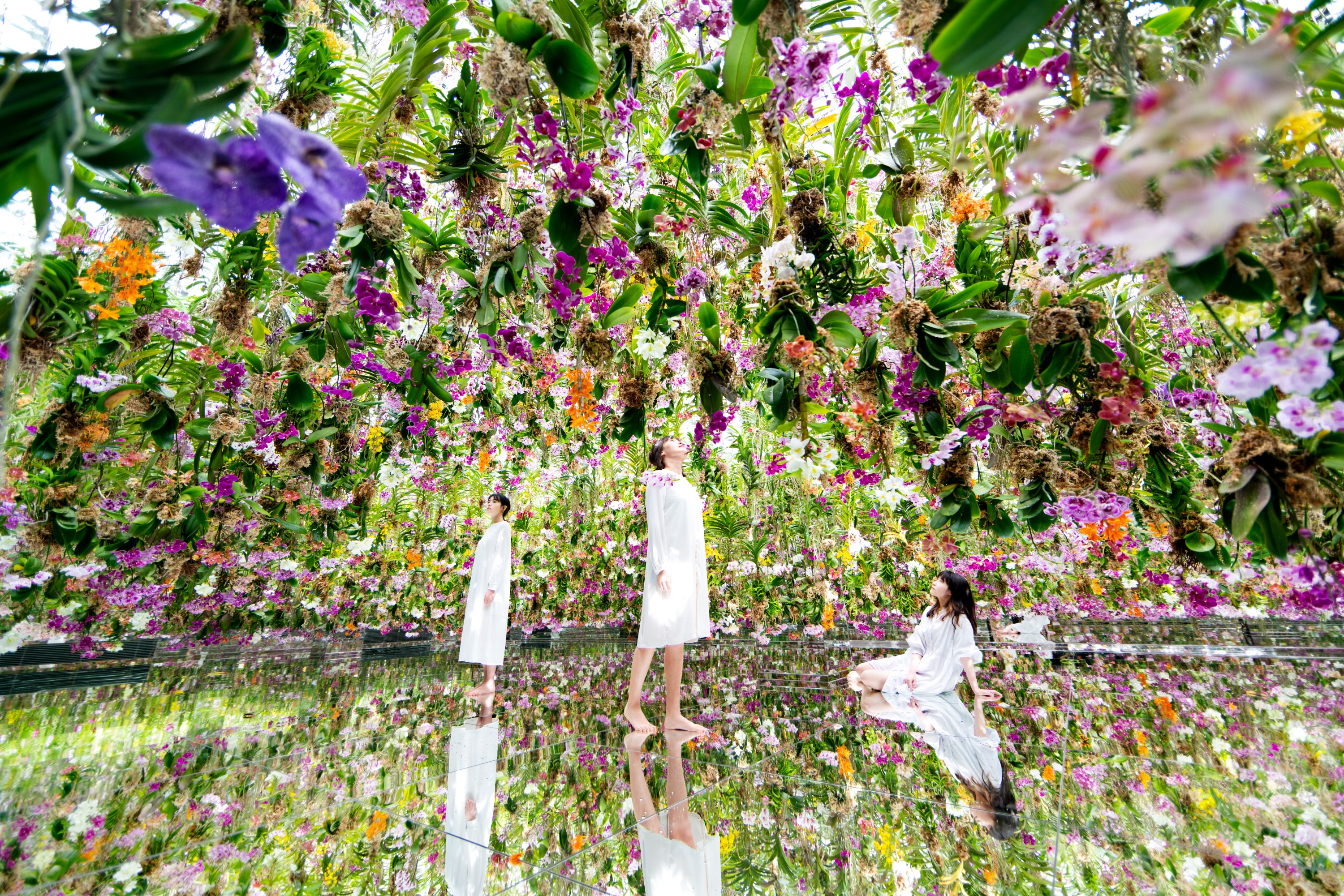
- Floating Flower Garden - 10,000 real orchids suspended in mid-air that rise and fall as you move through them.
- Moss Garden of Resonating Microcosms - softly lit moss balls that glow and change colour as you approach.
- Forest Area (new January 2025) - a major expansion that meaningfully adds to the overall visit time. Budget at least 90 minutes now this section is open.
Our full family walk-through video is worth watching before you go - it gives you a real sense of what to expect with kids in tow:

Visiting in June: What to Know
June is when Tokyo's rainy season (tsuyu) kicks in, usually starting the second week of the month and running into mid-July. Temperatures climb into the upper 70s and low 80s with humidity that makes the air feel thick. The good news for TeamLab Planets: it's an indoor venue, so rain doesn't affect your visit at all. In fact, rainy afternoons in June are some of the quietest times we've seen it because tourists tend to cluster at indoor attractions only when the forecast looks bad, and most people don't plan that far ahead.
Early June, before the rains really settle in, is still pleasant. Crowds are lighter than May since Golden Week travelers are gone and summer school holidays haven't started. If you have flexibility, weekday mornings or late evening slots are the easiest. We've always booked through Klook because it's faster than the official site and you can pick your exact time slot.
Practically speaking: wear slip-on shoes because you're removing them at the entrance, bring socks (you can go completely barefoot but most people prefer socks for the water sections), and if you have young children who struggle with dark spaces, the Crystal Universe room is very dark before your eyes adjust. Worth mentioning beforehand so nobody has a meltdown.
June-specific tip: bring a small towel or microfiber cloth. Between the humidity outside and rolling up your pants for the water rooms, you'll appreciate having something to dry off with before heading back into the heat.
Visiting in July: What to Know
July is peak summer in Tokyo. Hot, humid, and busy. Temperatures regularly hit 90°F with high humidity, so the air-conditioned interior of teamLab Planets is genuinely welcome rather than just a bonus. The water rooms feel particularly good in summer heat, which is worth knowing if you're visiting with kids who'd normally resist taking their shoes off.
The crowds are real in July. School holidays in Japan run through mid-July onwards, and international tourist numbers are high. Weekends especially fill up. Book your timed entry slot well in advance through Klook and aim for the first session of the day or the last evening slot, when the queues at each installation are noticeably shorter. Mid-week mornings are your best bet if you have flexibility.
Obon week falls in mid-August rather than July, so July itself doesn't have a single peak crunch point the way Golden Week does in spring. That said, the whole month runs busy. Don't assume you can walk up and get same-day tickets the way you might in a quieter month.
Practically speaking: wear slip-on shoes since you'll remove them at the entrance, and bring socks for the water sections. The venue is heavily air-conditioned, which is a relief after the heat outside but can feel cold quickly. Light layers help, especially for kids who have been sweating in the summer heat and then step into a chilled space.
Skip-the-Line Options and Combo Tickets
Klook also sells a Skip-the-Line Premium Pass for teamLab Planets, which gives you flexible entry within admission hours rather than a fixed time slot. If your schedule is unpredictable (travel with kids, anyone?), this is worth the small premium. There's also a combo ticket that includes entry to Senkyaku Banrai Toyosu Manyo Club Onsen plus a free drink - a nice way to extend the day in Toyosu.
Is teamLab Planets Worth It for Families?
Yes, straightforwardly. The age range it works for is surprisingly wide - our youngest was completely absorbed, our eldest was busy documenting everything for her journal, and our middle daughter was trying to figure out how the technology worked. All three left talking about it. The $24.25 Klook price is fair for what you get, especially compared to Tokyo Disney which is four times the price and half the wonder.
The one caveat: if you're sensitive to crowds or tight spaces, some rooms do get busy. Go at opening time or in the last hour before closing for a more spacious experience.
Stay Connected at teamLab Planets
You'll want data for navigating Toyosu, pulling up your Klook voucher, and inevitably posting at least one video from inside. We use Holafly's Japan eSIM - unlimited data, installs via QR code before you leave home, activates the moment you land. Use code ADAMANDLINDS for 5% off. If you're spending more than 3 weeks in Japan or travelling multi-country, the Holafly Plans subscription (from $49.90/month) is better value and includes Always On backup data across 76+ destinations.
Frequently Asked Questions
Do I need to book teamLab Planets tickets in advance?
Yes, especially in July. teamLab Planets uses timed entry and popular slots sell out days ahead during summer. Book on Klook with code ADAMANDLINDSKLOOK as early as possible, and aim for a weekday morning slot if you have flexibility.
How long does teamLab Planets take?
Allow 90 minutes to 2 hours now that the Forest Area has been added. You can move faster but there's no reason to rush. The installations reward time spent in them.
Is teamLab Planets suitable for toddlers and young children?
Yes, though some rooms are very dark and one exhibit involves wading through shallow water. Most children love it. Bring a change of socks in case the water sections get enthusiastic.
What's the difference between teamLab Planets and teamLab Borderless?
teamLab Planets is smaller, more intimate, and entirely barefoot. teamLab Borderless at Azabudai Hills in Tokyo is larger and a more sprawling walk-through experience. Both are excellent. Planets tends to land harder with younger children. Both are bookable on Klook with code ADAMANDLINDSKLOOK.
Is there a bag check at teamLab Planets?
Yes. Lockers are available at the entrance. Large bags and backpacks should be stored before entry as some passages are narrow.
This post contains affiliate links. If you book through our Klook link or use code ADAMANDLINDSKLOOK, we earn a small commission at no extra cost to you. We only recommend products and services we actually use. All opinions are our own.