

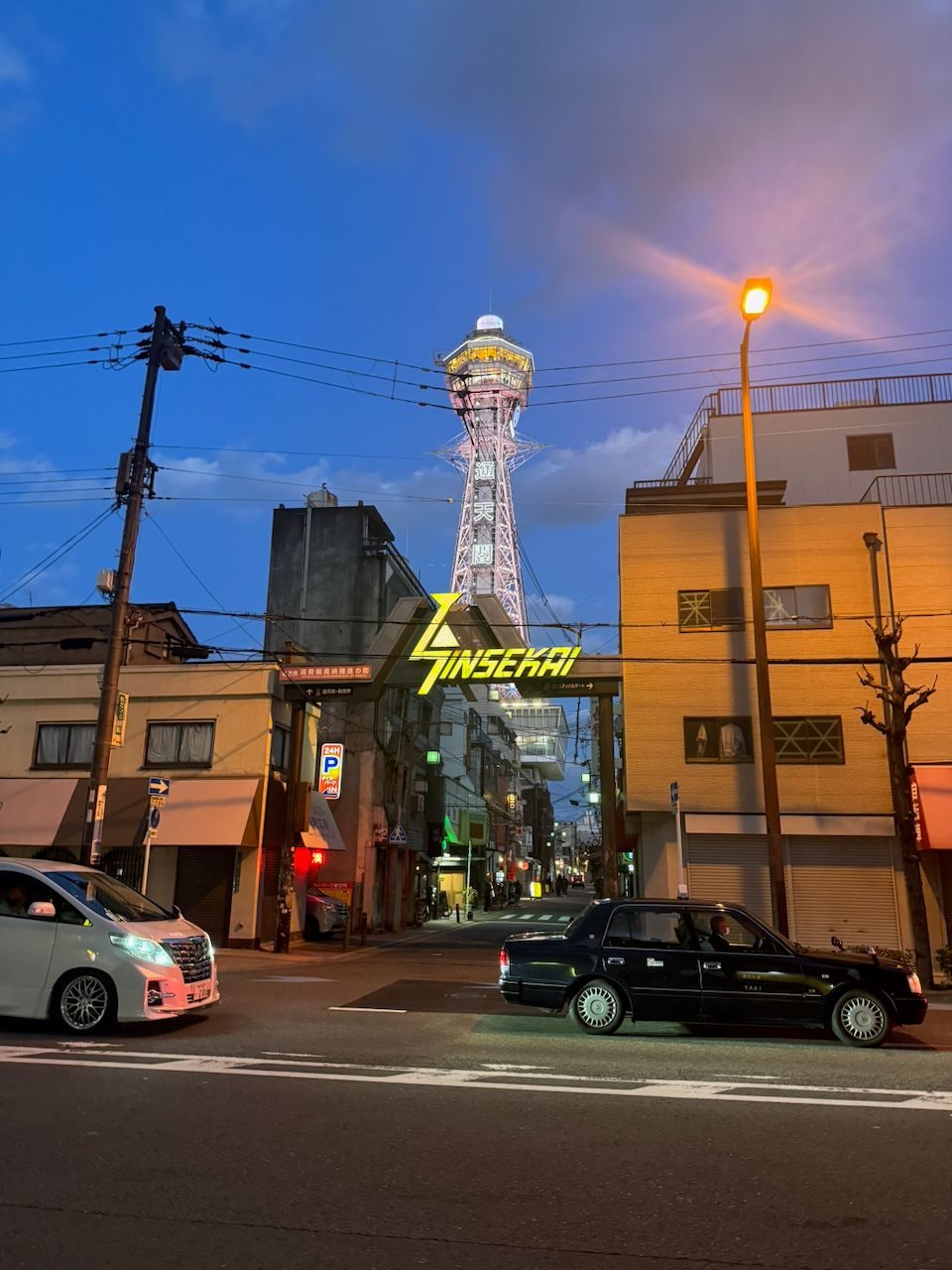
We were based in Osaka for about three months in early 2026, in an apartment down in the south of the city near Abeno. When people ask what to do in Osaka they usually mean Dotonbori and the Glico sign, and that is a fine first night. The neighborhood we actually kept returning to was quieter and older: the stretch that runs from Tennoji Park through the retro streets of Shinsekai, under the Tsutenkaku tower.
It is not the part of Osaka that ends up on postcards, and the zoo down there has cages that have barely changed since the Showa era. That is most of the appeal. Our girls could fill an afternoon there without us planning a single thing, and we could get a beer above a shopping mall afterward. This is what we did with the area, with the real prices and the walk between things, so you can do a slower version of it yourself.
Where Tennoji and Shinsekai actually are
Everything here hangs off Tennoji Station, a major hub on the JR Osaka Loop Line and the Midosuji and Tanimachi subway lines. Coming from Namba or Umeda it is a short ride, then a five to seven minute walk to the Tenshiba lawn at the north end of Tennoji Park.
Shinsekai sits on the western edge of the same park. You can walk from the Tennoji end to Tsutenkaku in about ten minutes without ever leaving the green space, which is the main reason the area works with kids. There is no long transfer in the middle of the day and no second train to talk anyone into. If you would rather start from the Shinsekai side, Dobutsuen-mae Station on the Midosuji and Sakaisuji lines drops you right at the zoo's western gate.
A half-day in Tennoji and Shinsekai
The southern Osaka loop on foot, from the zoo to the tower to dinner.
Shinsekai and the Tsutenkaku tower
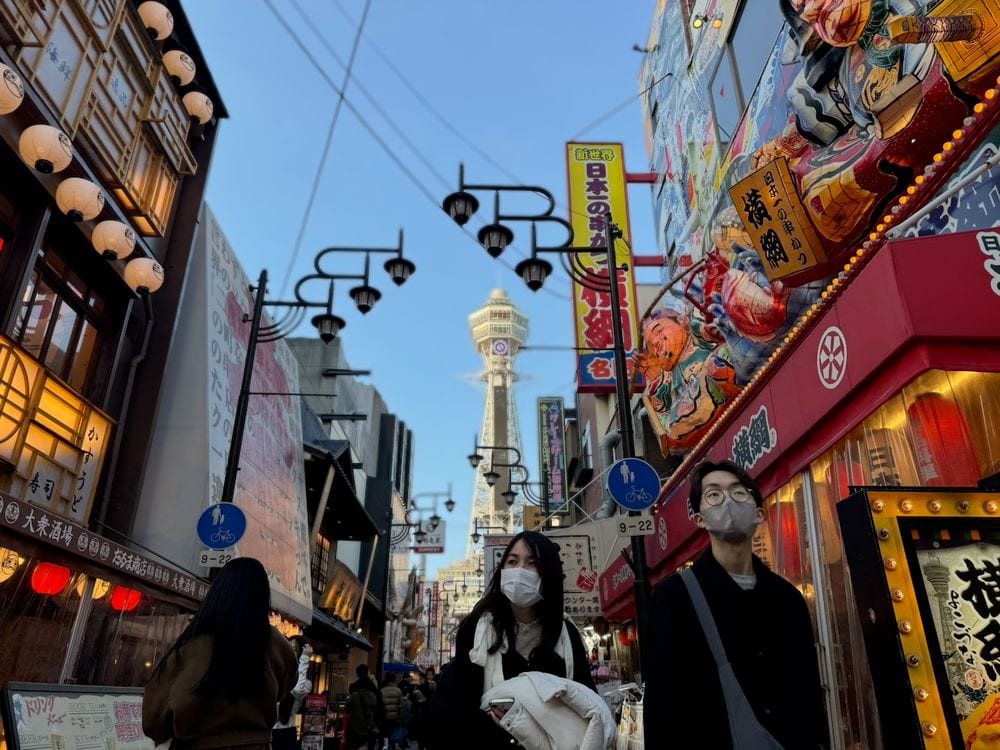
Shinsekai was laid out in 1912 around the first Tsutenkaku, which came down during the war and was rebuilt in 1956. The version you walk through now is loud and unapologetic: pufferfish lanterns, kushikatsu shops with plastic mascots out front, and the grinning Billiken good-luck figure in half the windows. The one rule with kushikatsu, the deep-fried skewers the area is known for, is that you dip once into the shared sauce and never again. Every counter has a sign about it.
The tower costs ¥1,200 for adults and ¥600 for children to reach the indoor observation deck at 87.5 meters, with the open-air Tenbo Paradise deck another ¥300 on top. From the fifth floor you look straight across to Abeno Harukas and down onto the green of Tennoji Park and the zoo. The queue is the catch. On a weekend the line snakes through basement tunnels and two separate elevators, and we once waited close to an hour for a view we saw for five minutes. On a weekday morning it is nothing. We mostly skipped going up and shot the tower from the street, which is the better photograph anyway.
We filmed a night through Shinsekai and Dotonbori on an earlier trip, if you want to see the streets in motion before you go.
Tennoji Zoo
Tennoji Zoo opened in 1915, which makes it the third oldest zoo in Japan, and it wears its age openly. Admission is ¥500 for adults, ¥200 for elementary and junior high students, and free for preschoolers, which was the cheapest few hours of entertainment we found anywhere in the city. It runs 9:30 to 17:00 with last entry at 16:00, closed on Mondays and over the New Year.
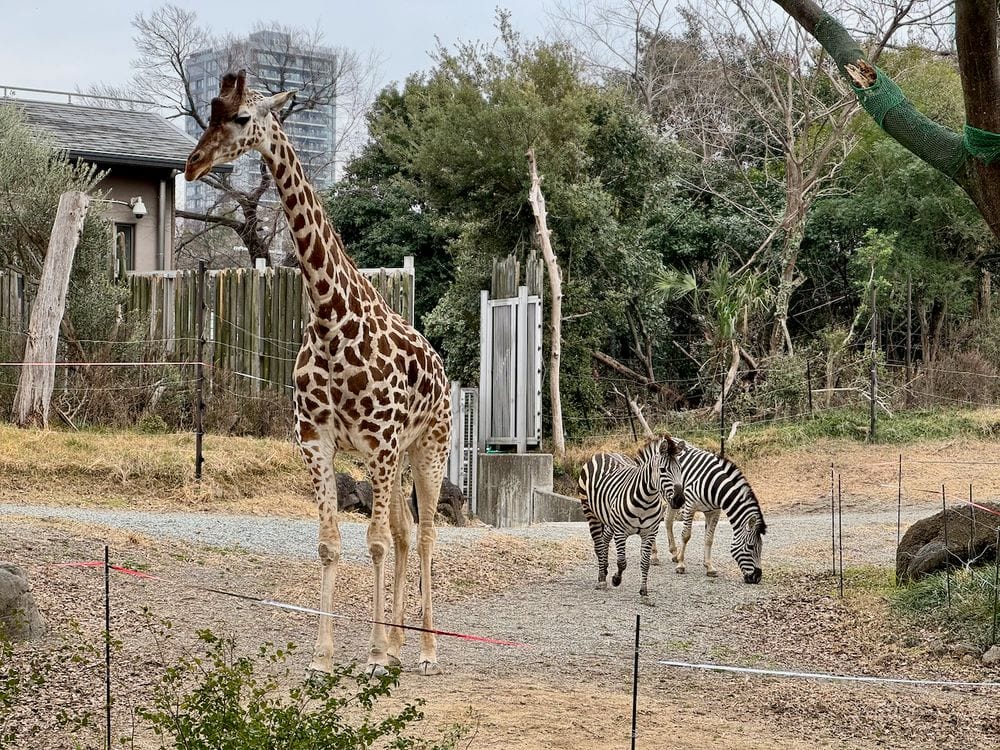
The honest version is that some enclosures are small and dated, and an ongoing renovation means a couple of exhibits are usually fenced off on any given day. What earns the ¥500 is the African Savanna section, where giraffes and zebras share an open field with an Osaka high-rise poking up right behind the tree line. Our middle daughter Cora stopped at the giraffe rail on every single visit to deliver a full report to her sister. The lions, for their part, are almost always asleep. The male was fully committed to his nap each time we went while the two lionesses kept a lazy eye on the crowd from the rock above. The hippo pool has an underwater viewing window that is better than it has any right to be.
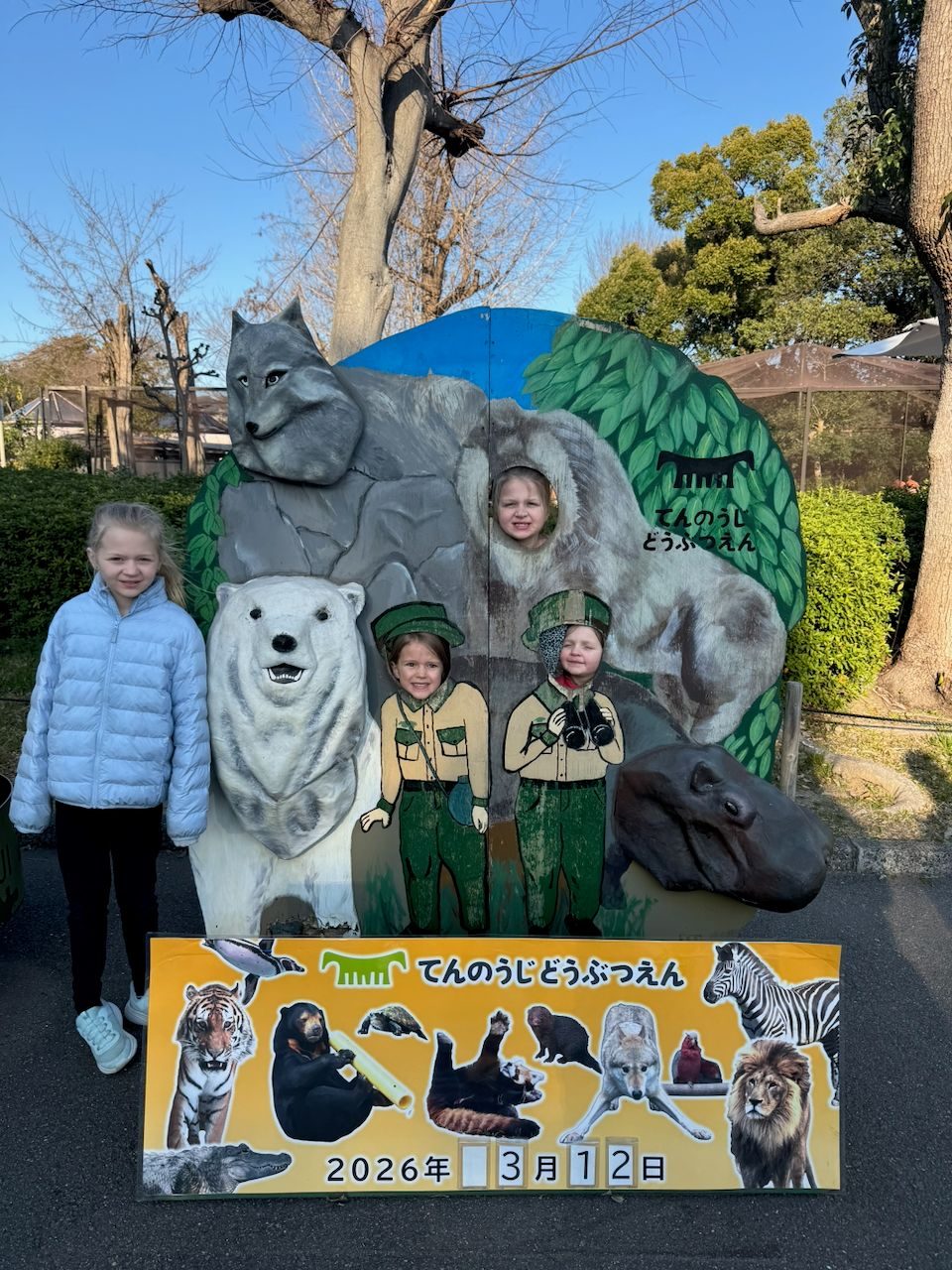
There is a dated cutout photo board at the entrance, two safari rangers and a wolf, that the girls treated as non-negotiable. Weekday mornings fill up with school groups between roughly 9:30 and noon, so if you want the place calm, go after lunch.
| Spot | Adult | Child | Good to know |
|---|---|---|---|
| Tennoji Zoo | ¥500 | ¥200, under 6 free | Closed Mondays, last entry 16:00 |
| Tsutenkaku deck | ¥1,200 | ¥600 | Long weekend queues, quiet on weekday mornings |
| Tennoji Park / Tenshiba | Free | Free | Open lawn and cafes, good for a picnic |
We were online the entire time we lived here on a Holafly eSIM, which mattered most for pulling up train times mid-meltdown on the Midosuji line. For a stay past a month, their monthly Plans work out cheaper than stacking single-trip eSIMs.
Holafly eSIM for Japan
Unlimited data that works the minute you land at Kansai or Itami.
Use code ADAMANDLINDS for 5% off.
See the Holafly dealTennoji Park, Chausuyama, and where we ate
Between the zoo and Shinsekai sits Chausuyama, a small hill and pond that was a genuine battlefield in 1615 and is now a corner of the park most visitors walk straight past. We ended up there for gyoza more than history. There is a spot near the hill trading as The Juicy Gyoza Manufactory, a name that does all the marketing for you, and it delivered exactly what the sign promised.

For a bigger dinner we went for yakiniku and grilled our own wagyu while the girls fought over the tablet ordering system, which in Japan is an attraction in its own right. When we wanted something lower effort, we found a small British pub on an upper floor of the Abeno shopping complex, the kind of thing that only turns up when you live somewhere rather than visit it. Beers for us, soft drinks for them, neon shopping signs through the window. Abeno Harukas, the tallest building in Osaka at 300 meters, is right there above the station if you want a proper observation deck instead of the Tsutenkaku queue.
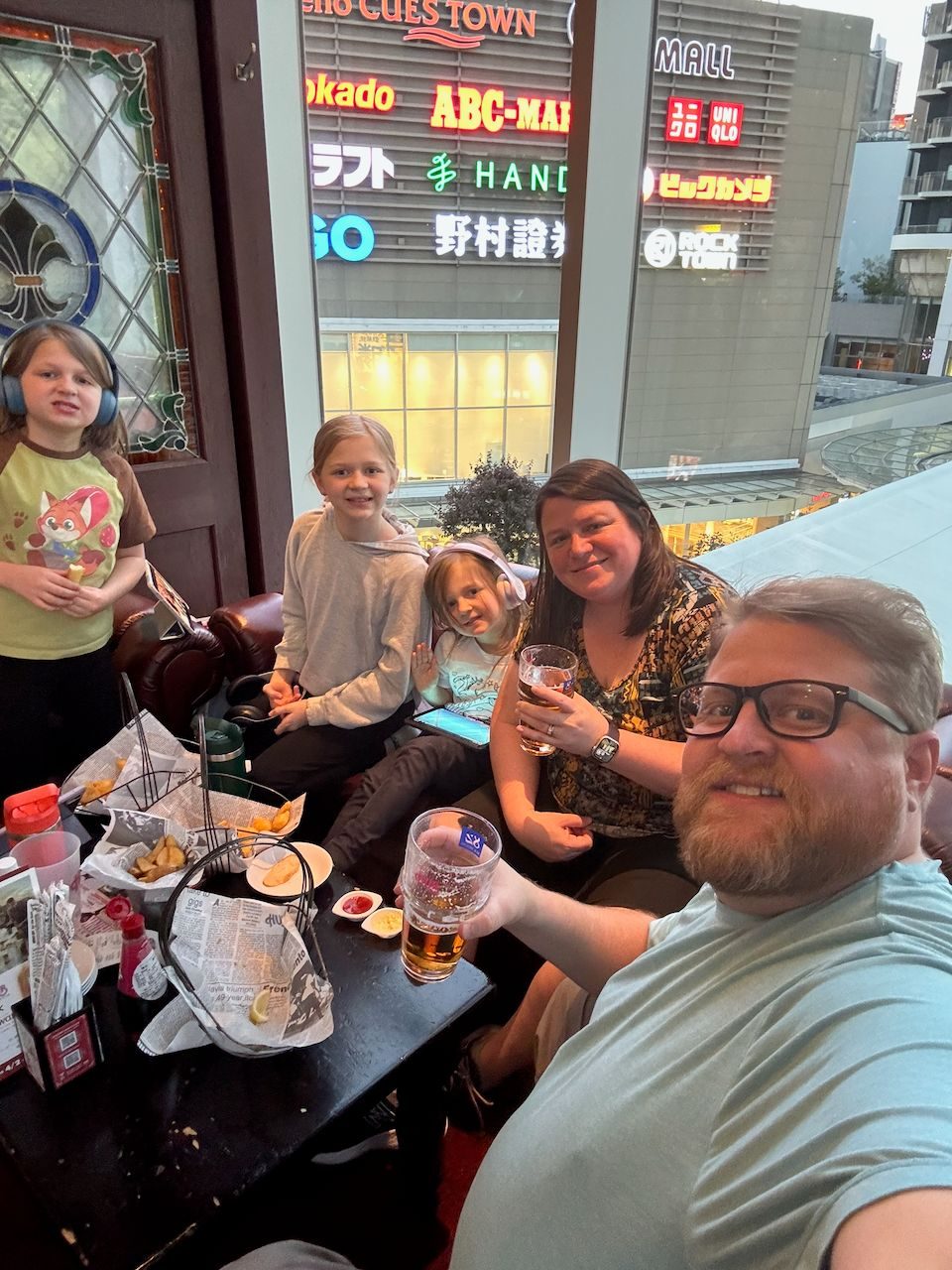
A half-day, start to finish
If you only have one afternoon and a few kids to keep moving, this is the loop we ran again and again. It holds together on foot, which is the point.
Our Route
A Half-Day in Tennoji and Shinsekai
Roughly four hours, all on foot from Tennoji Station.
Late morning
Tennoji Zoo
Enter at the Tenshiba gate and head straight for the African Savanna. Budget about ninety minutes and go after any school groups.
Early afternoon
Tennoji Park and Chausuyama
Walk west across the park. Gyoza near the hill, or a picnic on the Tenshiba lawn if the weather cooperates.
Mid-afternoon
Shinsekai and Tsutenkaku
Kushikatsu, arcade games, and the tower from street level. Skip the deck on weekends unless the line is short.
Evening
Abeno
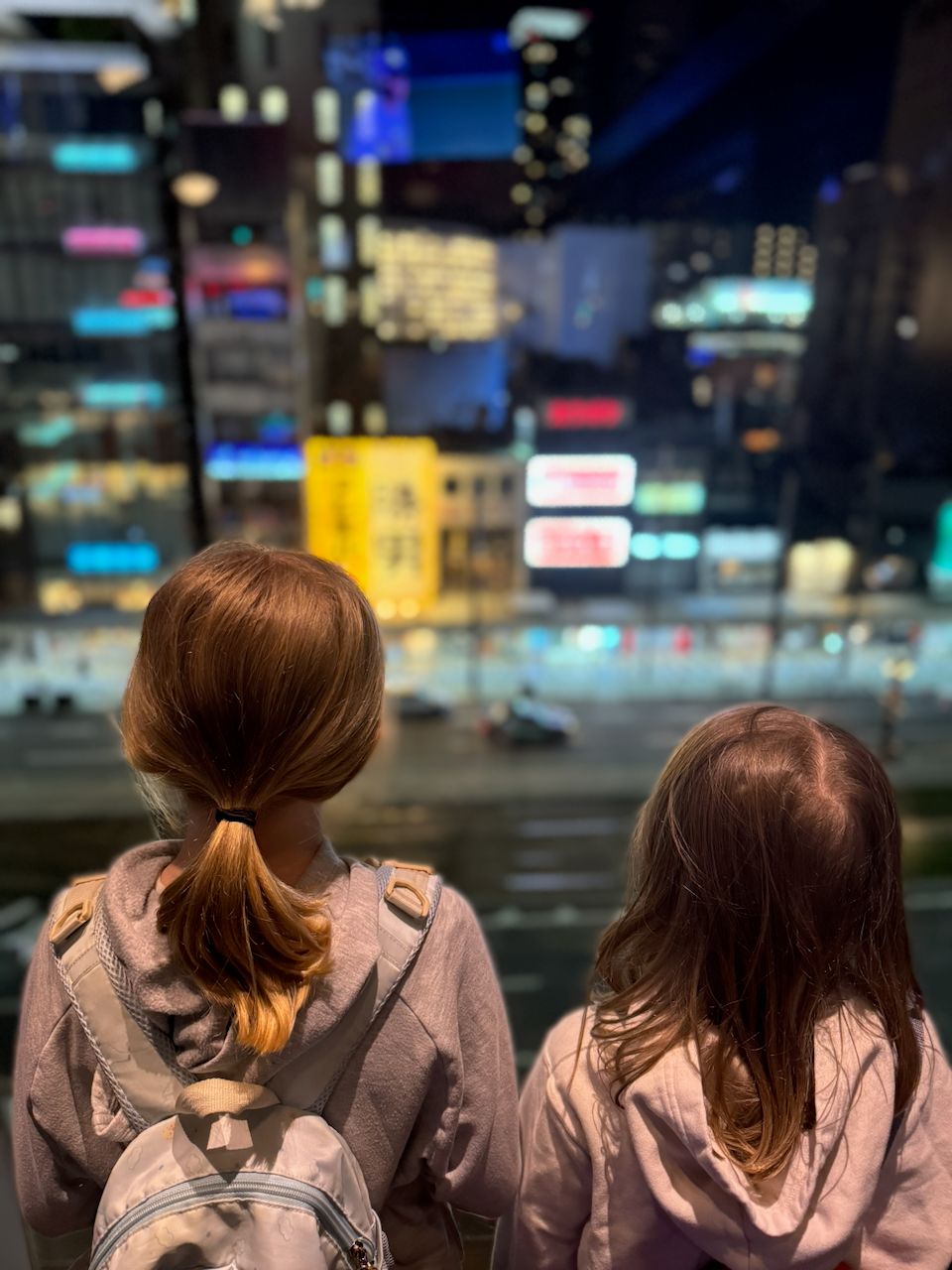
Loop back toward the station for yakiniku or a quiet beer above the mall as Namba lights up.
FAQ
Tennoji and Shinsekai questions
The things people ask us before they go.
Yes, if you go in with the right expectations. At ¥500 for adults and ¥200 for school-age children it is one of the cheapest half-days in Osaka, and the African Savanna and hippo enclosures are the standouts. Some cages are old and a renovation means a few exhibits are usually closed, so treat it as a relaxed few hours rather than a modern wildlife park.
The indoor observation deck at 87.5 meters is ¥1,200 for adults and ¥600 for children, and the open-air Tenbo Paradise deck adds another ¥300. Weekend queues are long and involve two elevators, so visit on a weekday morning or skip the deck and photograph the tower from the street.
You walk. It is about ten minutes on foot straight through Tennoji Park, with no need to change trains. If you would rather arrive directly in Shinsekai, take the Midosuji or Sakaisuji line to Dobutsuen-mae Station, which sits by the western gate of the zoo.
This post contains affiliate links, including to Holafly. If you purchase through our links we may earn a small commission at no extra cost to you. All opinions are our own.


