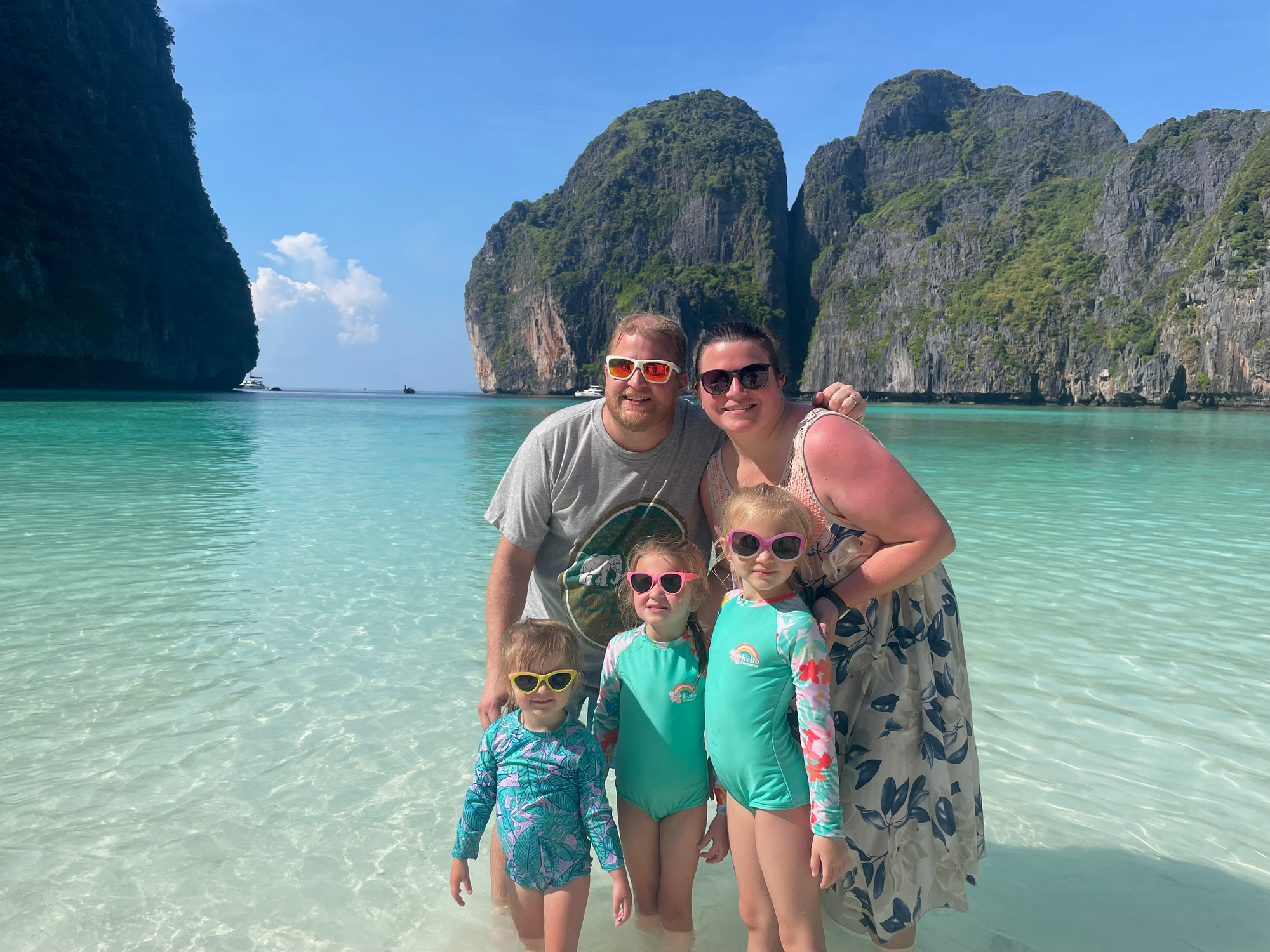

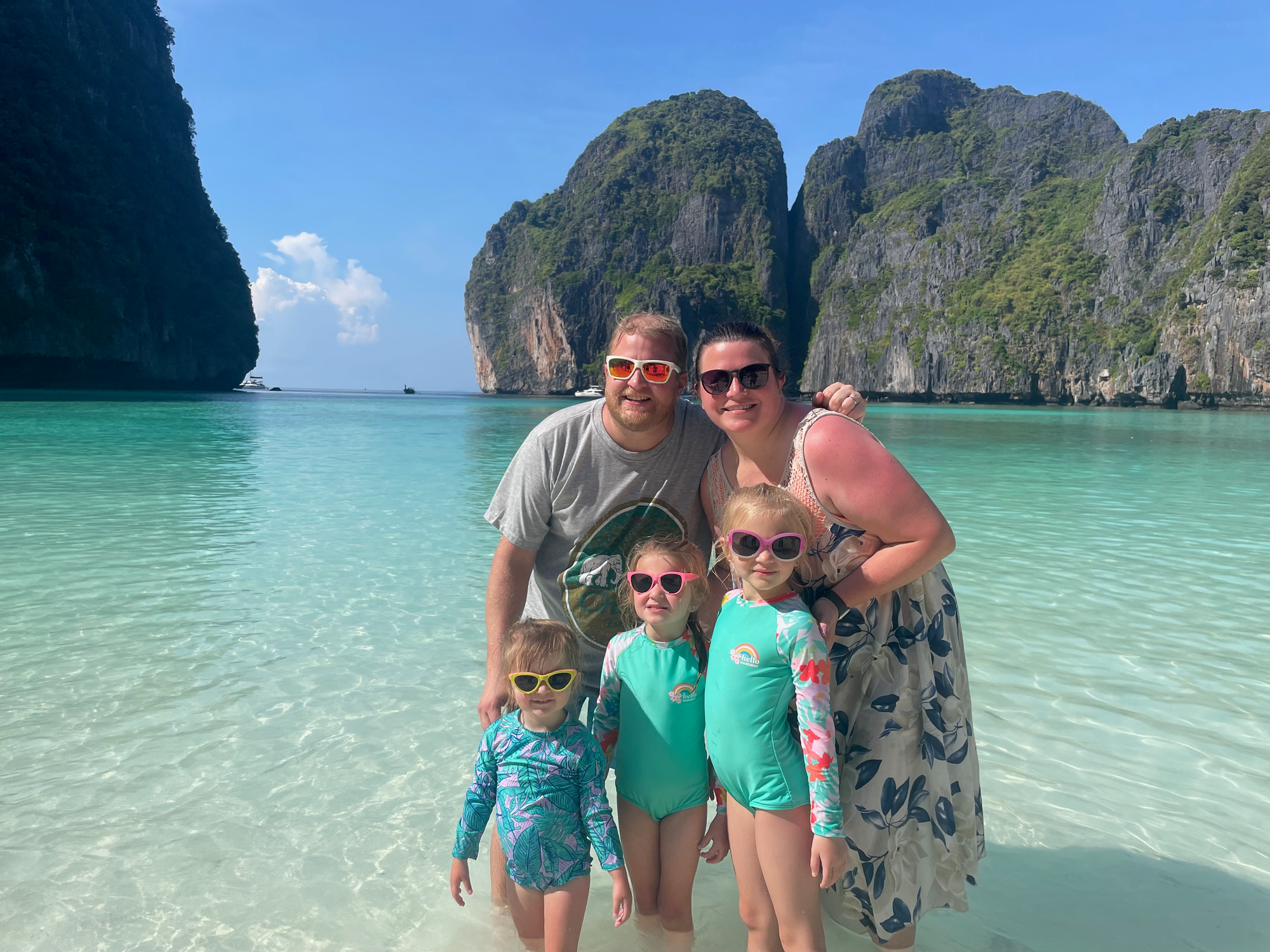
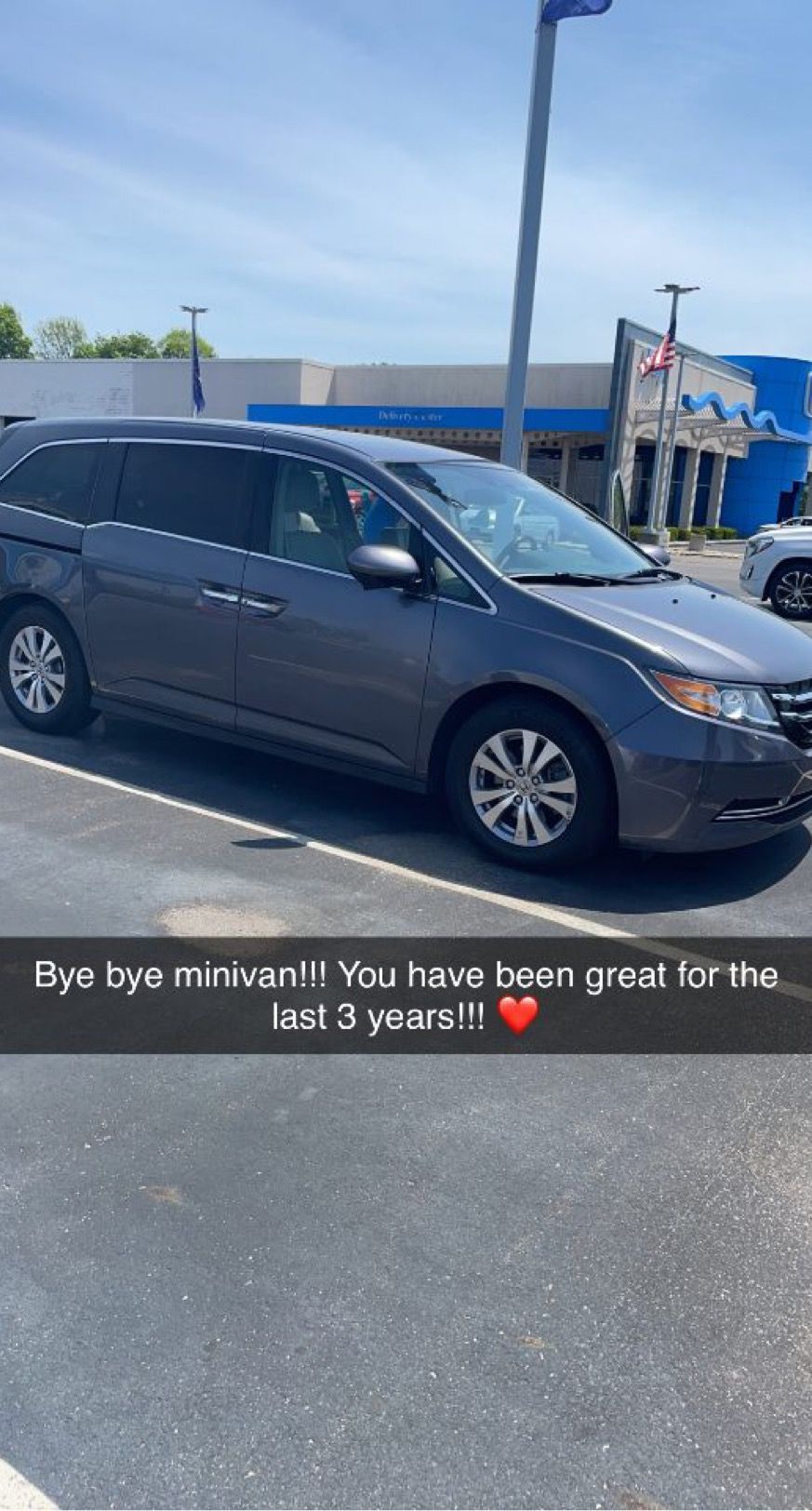
We sold the minivan in May 2022. Then the Lexus. Then the house. We boarded the Queen Mary 2 out of New York with seven bags for five people, three daughters aged six, four, and two, and a fairly vague plan that amounted to: figure it out as you go. Four years and 34 countries later, our oldest is ten and has been to Japan 13 times. Our youngest just turned seven in Da Nang, Vietnam, where we've spent more total days than anywhere else on Earth outside Indiana. This is what worldschooling actually looks like from the inside, four years in.
What is worldschooling?
Worldschooling is the practice of using travel and cultural immersion as the foundation for a child's education, typically combined with homeschooling, online curricula, or unschooling approaches. The world is the classroom in ways four walls simply cannot replicate.
The distinction that matters: worldschooling isn't homeschooling that happens to take place while traveling. It is a deliberate choice to let location, culture, language, and experience drive a significant portion of the educational content. When we studied Buddhist traditions in Thailand, we visited active temples and watched monks receive alms at sunrise rather than reading about it in a textbook. When Lily was eight and we were in Tokyo, she started tracking what things cost in yen versus dollars because she wanted to buy more at the markets. Currency exchange by necessity, not lesson plan. When we covered marine biology, they pressed their faces against the glass at Kaiyukan in Osaka while a whale shark cruised past.

Is worldschooling legal?
Yes, in most jurisdictions. Since worldschooling functions as homeschooling, legality depends on your home country's rules rather than wherever you're physically located at any given moment.
For US families, homeschooling is legal in all 50 states, though requirements range from almost nothing to formal testing and portfolio reviews depending on where you maintain residency. We've held Indiana residency since 2022. Indiana's requirements are minimal: no mandatory testing, no required filings. We keep records anyway, both because it's good practice and because we care about the girls' academic progress.
Before you leave, spend time on these questions:
- Does your state require annual notification to a school district?
- Are standardized tests or portfolio reviews required, and if so, how are those administered while traveling?
- Does your state allow you to enroll in an accredited online school as your homeschool method, which simplifies documentation considerably?
If you're not a US family, the picture varies significantly. Germany has strict compulsory school attendance laws with limited homeschooling exceptions. Australia, Canada, and New Zealand have relatively flexible frameworks. Research your home country thoroughly, and consider consulting an education law professional before committing to long-term travel.
We maintain legal homeschool status through our Indiana residency, where requirements are minimal. We still keep detailed records of educational activities and maintain portfolios for all three girls.
Our actual daily rhythm (four years in)
To be truthful: there is no fixed schedule. We don't do morning school blocks from 9 to noon every day. What we have instead is a general understanding that academic work happens, usually in the morning when energy is highest, and that afternoons are for whatever the location offers.
In Da Nang, where we've been since early May 2026, the girls typically do focused academic work for one to two hours in the morning, then spend the afternoon at the beach or the pool, with evenings at night markets or local restaurants. Da Nang sits on one of the longest continuous stretches of coastline in Southeast Asia, and our girls have collectively spent hundreds of hours running around on it like kids.
In Osaka, where we spent most of early 2026, the rhythm was different. We did more structured schoolwork because we were exploring more intensively. The Nintendo Museum in Uji had an interactive karuta floor that had Lily and Cora locked in for 45 minutes reading cards and working out the logic. Two weeks later they were teaching Harper the traditional version at our apartment table.
When we're in transit or have heavy travel days, school gets lighter. The first few days somewhere new are exploration. After that the routine tightens.
| Age range | Typical formal work per day | What fills the rest |
|---|---|---|
| 5 to 7 | 30 to 60 minutes | Play, observation, language exposure, movement |
| 8 to 10 | 1 to 2 hours | Structured activities, reading, creative projects |
| 11 to 14 | 2 to 3 hours | Independent projects, online courses, deeper exploration |
| 15 to 18 | 3 to 5 hours | Transcript-building coursework, portfolio development |
What we actually use for curriculum
Reading Eggs is where our girls learned to read, and it's still what Harper uses for literacy work at seven. It works particularly well for younger kids who respond to structured progression. Our full honest review after four years of use is here.
Outschool has become indispensable. Live sessions with actual teachers on everything from creative writing to Mandarin to marine biology. When we were in Japan, Lily did a class on Japanese folklore taught by a teacher based in Kyoto. Use code ADAMANDLINDS30 for $30 toward your first class.
Khan Academy handles the structured math and science baseline for all three girls. It's free, comprehensive, and the pace-at-your-own-level approach suits a lifestyle where daily consistency isn't guaranteed.
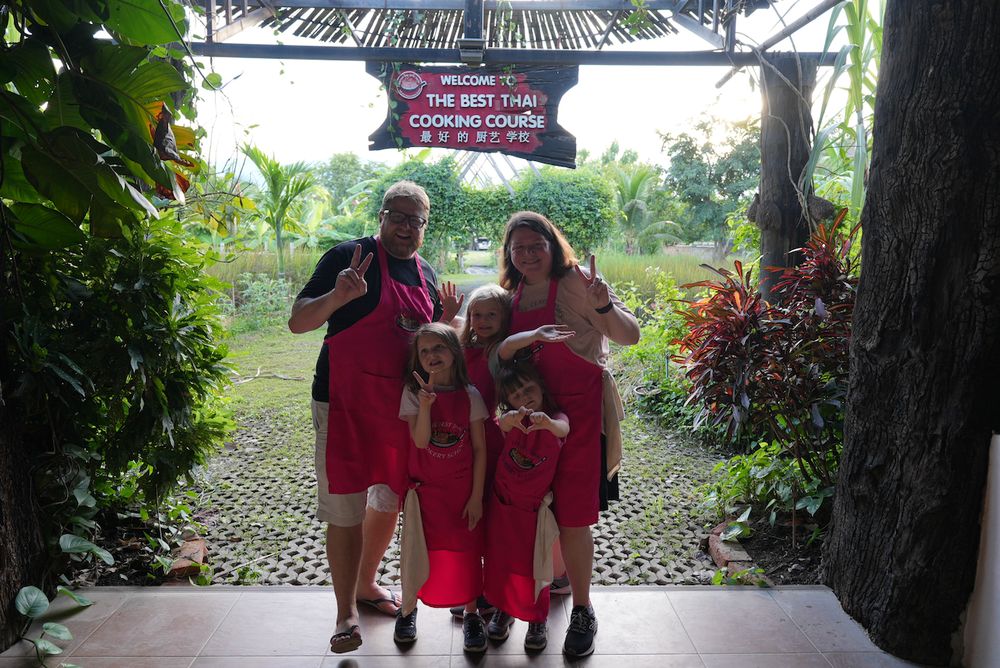
Beyond that, we lean on whatever is around us. In Chiang Mai the girls did a full Thai cooking class at The Best Thai Cooking Course, which has been running since 2006. We all showed up in matching red aprons and learned from scratch in a kitchen outside the city.
What age should you start worldschooling?
We started when our girls were six, four, and two. Lily was old enough to remember places and form real attachments to them. Cora adapted faster than anyone. Harper has no reference point for a life that doesn't involve boarding passes and night markets. This is just how the world works to her.
After four years and dozens of worldschooling families met along the way, the window we keep seeing work best is roughly five to twelve. Young enough that adaptation is mostly painless, old enough to actually retain what they're living through. The language acquisition piece is real. Kids under ten pick up languages in a way that just doesn't happen later, and our girls have absorbed more Thai, Japanese, Vietnamese, and Spanish than years of classroom instruction would have produced.
Starting with teenagers isn't a dealbreaker, but it's harder. The social stakes are higher, the academic requirements are more specific, and getting buy-in from the teenager themselves matters a lot more than it does with a seven-year-old. The ones who thrive tend to be kids who genuinely wanted this. For those kids, four years of documented real-world learning can make for a college application that stands out in ways a suburban high school transcript never will.
Ba Na Hills, birthdays, and what the classroom actually looks like
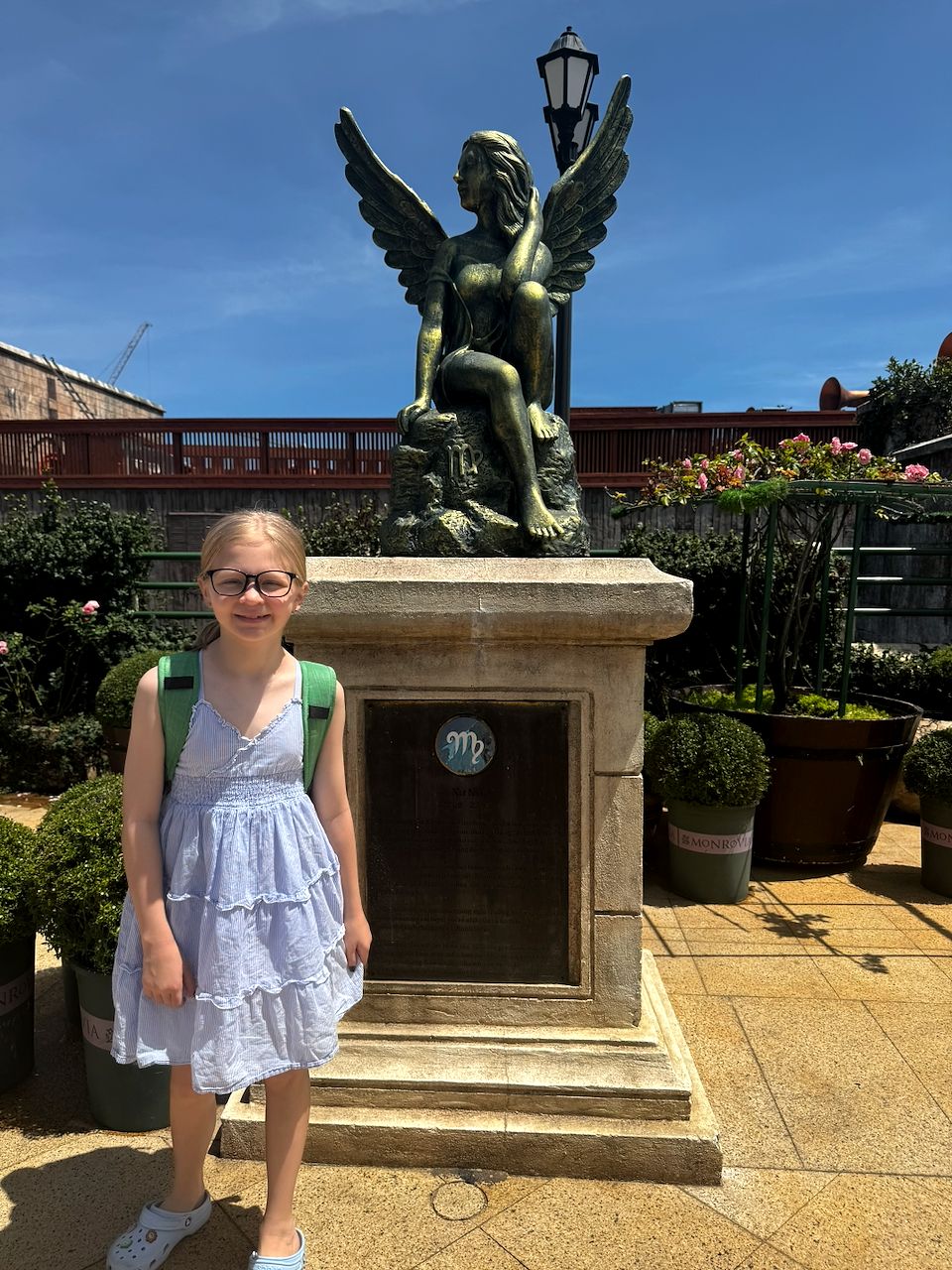
Harper turned seven on June 25, 2026. The next morning we took the cable car up to Ba Na Hills, the mountaintop resort about an hour outside Da Nang, and she spent most of the morning at the Rose Garden with a small notebook, drawing the zodiac statues one at a time. Nobody asked her to. She'd been reading about zodiac systems on a plane a few weeks earlier and decided this was the assignment.
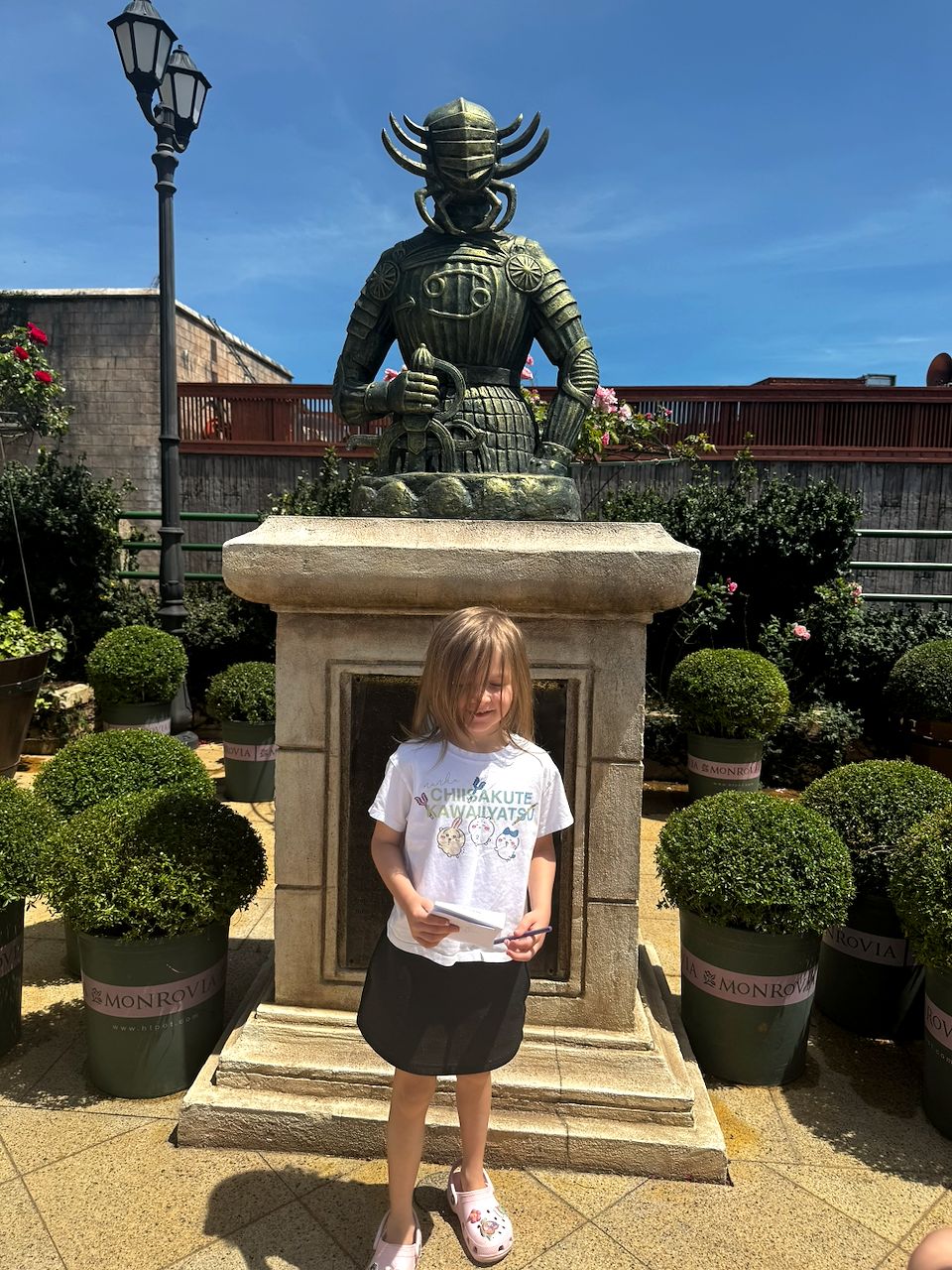
Is that a school lesson? Sort of. It's zodiac history, sculpture observation, and a seven-year-old choosing her own subject and following through for two hours in 90-degree heat. That last part is the part traditional classrooms mostly can't teach.
The Lapland question (and why experiences like this matter)
In January 2026, we flew from Vienna to Rovaniemi in Finnish Lapland. The girls met Santa in his actual cabin in the snow. We rode reindeer-pulled sleighs through frozen pine forests. Harper stood at minus-fifteen with her bear-ear hat on, grinning like she owned the entire Arctic Circle. We watched the northern lights break through the clouds over the treeline at 11pm.
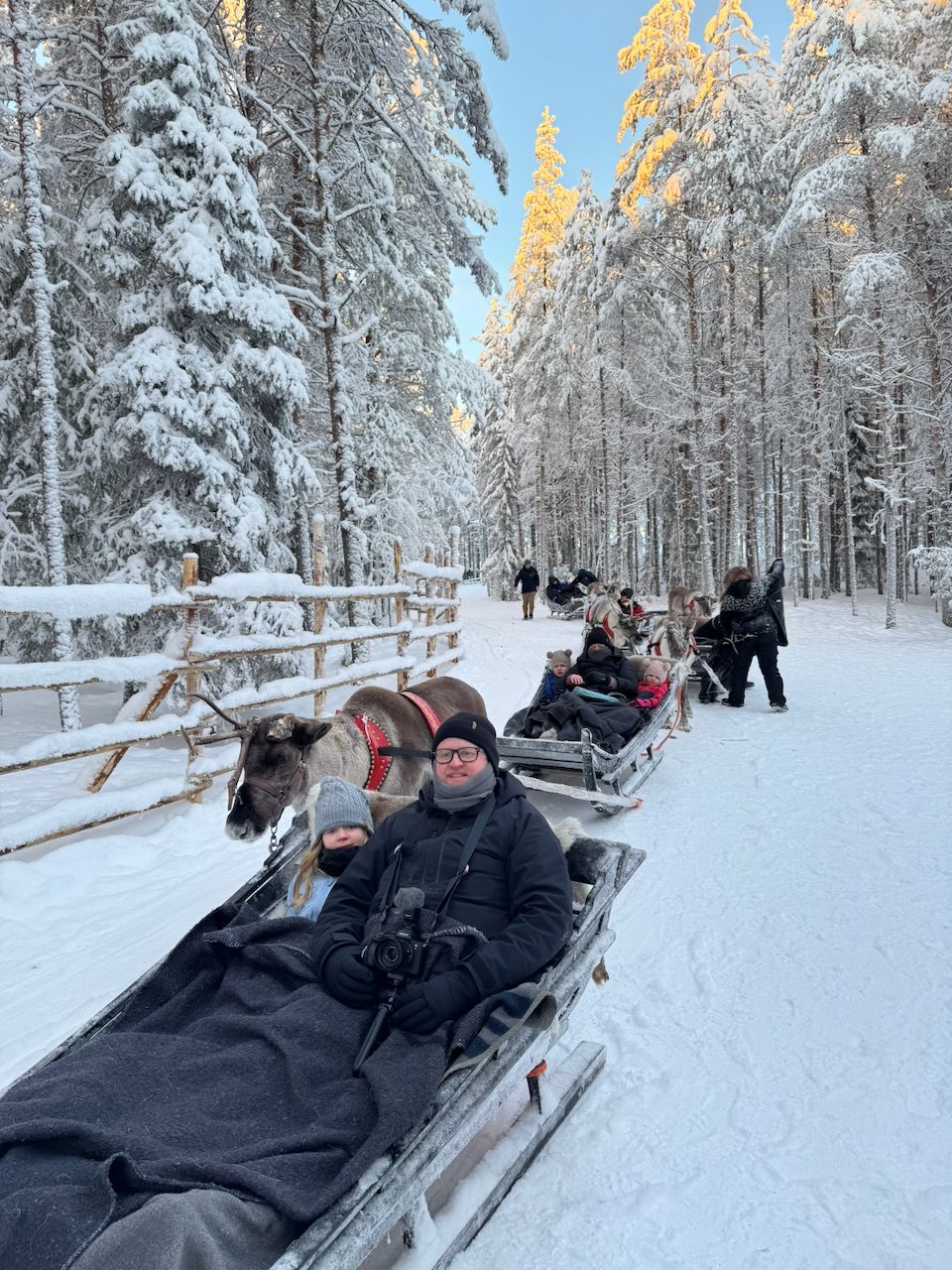
Is that a school lesson? Sort of. It's geography, climate science, Sámi cultural history, and Arctic ecology rolled into a week. But more than that, it's a formative memory that shapes how those three kids understand what the world actually contains. Cora and Harper and Lily know that reindeer are real animals you can feed by hand in a forest while it's snowing. That's not trivia. That's a kind of knowing that doesn't come from photographs.
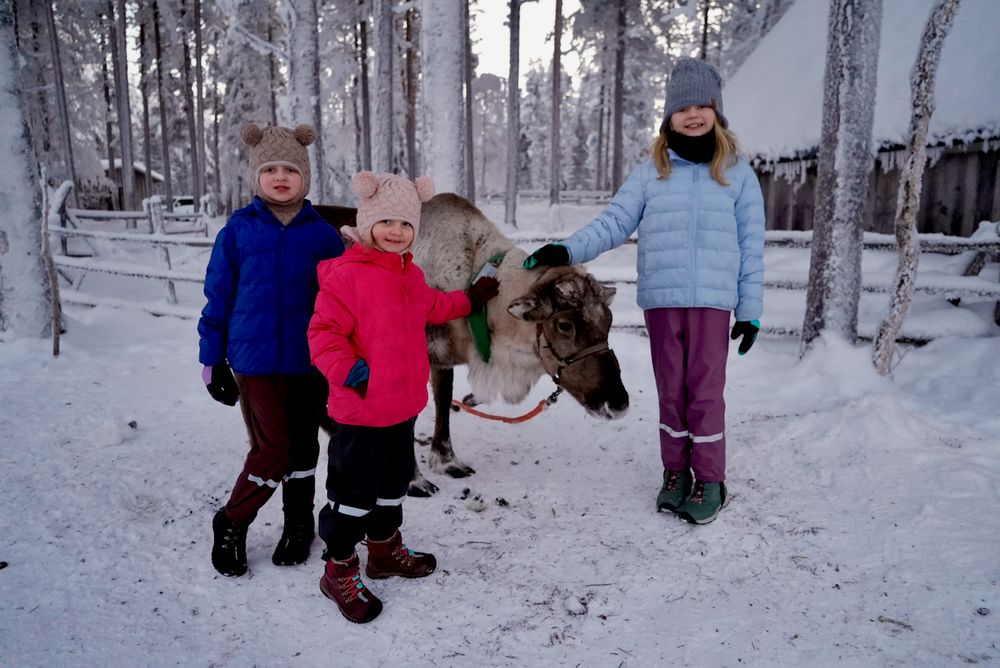
This is the argument for worldschooling that no curriculum document captures. You can teach climate zones on a worksheet or you can stand in Arctic Finland in January watching light pillars form over a frozen lake. Both are education. One of them sticks.
Is worldschooling bad for kids?
We get this question in some form constantly, usually from people who are skeptical and deserve a real answer rather than a defensive one.
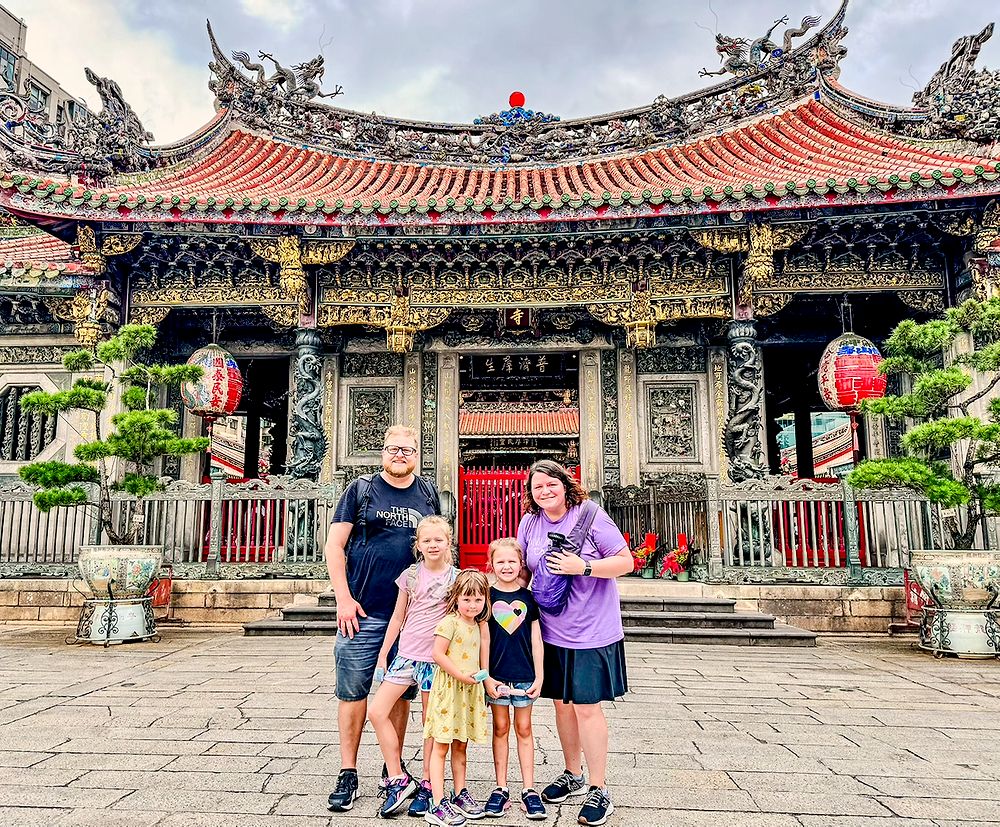
The honest version: it's not universally good or bad. It's different. Our girls have developed things that traditionally schooled kids typically don't develop at this rate. They have cultural adaptability, comfort with ambiguity, real language exposure, geographic intuition, and a genuine understanding that "normal" varies depending on where you are. Lily can navigate the Osaka subway by herself. Harper walked into a Taiwanese night market at age six, pointed at something sizzling on a stick, and ate it without flinching.
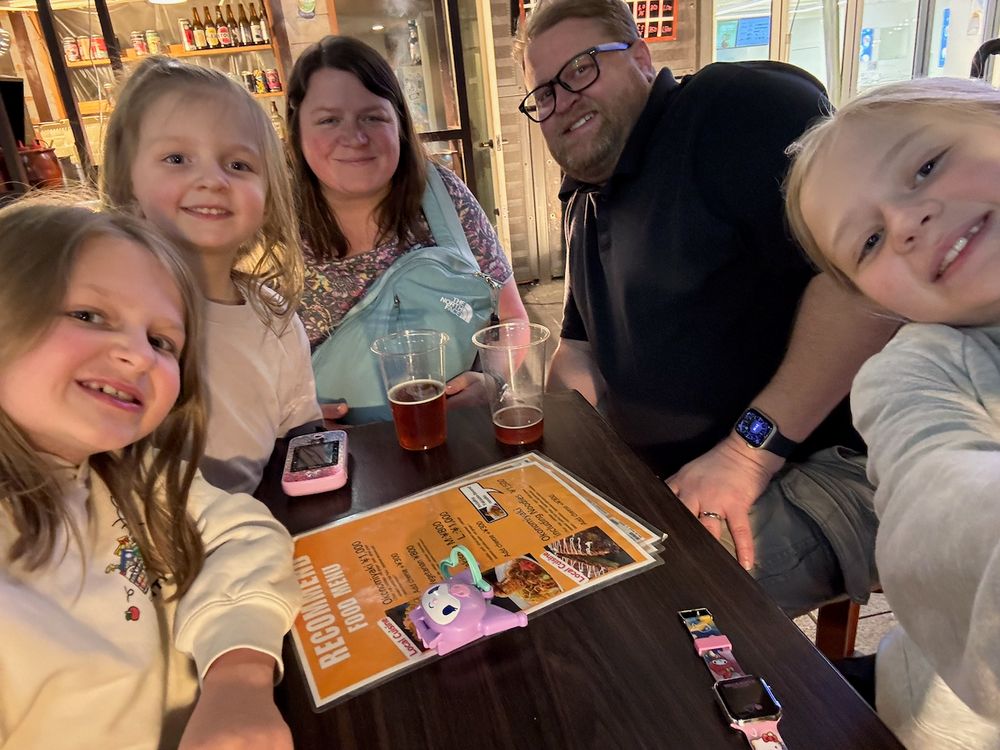
What they've given up, at least temporarily: consistent peer groups, predictable routines, and some of the social markers that matter to kids in traditional school settings. They occasionally miss their cousins. They sometimes describe wanting "a house with a yard." We take those things seriously rather than dismissing them.
The things to watch for if you're doing this:
- Persistent homesickness that isn't resolved by connection time with family back home
- Academic regression despite your best efforts (which can happen, especially in math)
- Social withdrawal or significant difficulty connecting with kids they meet
- A child who consistently and sincerely says they want to stop
None of those have been our experience. But they are real risks for some families and worth naming honestly.
Are worldschool kids weird?
A little bit. Mostly in ways that are positive, though the positive version of weird doesn't always translate cleanly when they spend time with traditionally schooled kids their age.
They move between cultural contexts with an ease that surprises adults. They bow when greeting people in Japan without being reminded. They take their shoes off at thresholds before anyone asks. They understand that "normal" is a highly local concept. When other kids talk about what's popular on TV, ours sometimes answer with something about a temple they visited or a food they tried, because that's what's in their heads.
What occasionally reads as weird: they're sometimes restless in structured environments. They're used to a lot of physical freedom and sensory novelty, so sitting at a desk for six hours strikes them as genuinely puzzling. They sometimes don't know the cultural references their peers share, which can create social distance. And they ask questions with a directness that seems to bypass the social filtering their peers have developed, possibly because they've spent four years navigating languages and cultures where directness is more common.
Our honest take after watching three kids grow up this way: the differences are real, and most of them are net positives. The social adjustment costs are real too, and pretending otherwise doesn't help families make good decisions.
How to actually start worldschooling
This is the section that should be more practical than inspirational, because the inspiration is easy to find and the logistics are where people get stuck.
Step 1: Sort out your legal situation before you leave
Research your state or country's homeschooling requirements and satisfy them before departure. This is not optional. "We're traveling" is not a legally recognized educational status. You need an actual homeschool filing, or enrollment in an accredited online program, or whatever your jurisdiction requires.
Step 2: Choose a base curriculum approach
You don't need to solve this perfectly before you go, but you need a working answer. The three main approaches are structured (an online school with real teachers and schedules), eclectic (mix of resources you curate yourself), and unschooling (experience-led, minimal formal structure). Most worldschooling families we've met use a hybrid of structured and eclectic. We do.
Step 3: Build your connectivity plan
You are dependent on reliable internet for almost everything: curriculum, video calls with family, work, navigation. This is where we use Holafly's global eSIM Plans, which we've been using across 30+ countries without needing to think about local SIMs. The Unlimited Plan ($64.90/month) covers 160+ countries with hotspot included. For a family homeschooling online, having data that just works when you land is not a nice-to-have. Holafly also runs an Always On feature: cancel your subscription and you keep 1GB/month in 70+ countries automatically. That has covered us on slow travel months more than once.
Holafly eSIM
The world's first international mobile operator. One eSIM, 160+ destinations.
Use code ADAMANDLINDS for 5% off destination eSIMs, or 10% off the monthly global Plans.
Get your eSIMStep 4: Start with a test run
Take a 3 to 4 week trip before committing to full-time travel. School through it. See how your kids handle different sleep schedules, unfamiliar food, and the absence of their usual stuff. See how you handle the logistics. The decision to sell everything and leave is much easier to make confidently if you've done a version of it first.
Step 5: Choose beginner-friendly destinations
Your first extended stop should not be somewhere with unreliable infrastructure, major language barriers, and difficult visa situations. Southeast Asia is the classic starting point for good reasons. Thailand, Vietnam, and Malaysia all have good internet, affordable accommodation with full kitchens, large expat and worldschooling communities, and kids who will find approximately 400 things they want to do every single day.
| Destination | Why it works for beginners | Monthly budget estimate (family of 5) |
|---|---|---|
| Da Nang, Vietnam | Beach base, great internet, huge expat community, affordable | $2,500 to $3,500 |
| Chiang Mai, Thailand | Large worldschooling community, cooler temps, easy lifestyle | $2,000 to $3,000 |
| Lisbon, Portugal | English widespread, Schengen access, good infrastructure | $4,000 to $5,500 |
| Taipei, Taiwan | Incredibly safe, excellent transport, low cost | $3,000 to $4,000 |
Worldschooling and the eSIM Plans question
This comes up in our DMs constantly: what do we do for data when we're somewhere for months at a time?
For shorter stays (under 30 days), a destination-specific Holafly eSIM with code ADAMANDLINDS makes sense and is our standard recommendation. For longer stays and multi-country moves, the global Plans are better value. We're on the Unlimited Plan for our current Da Nang-to-Japan corridor because we move frequently enough that swapping eSIMs is friction we don't need.
Light Plan
$49.90/month
25GB across 160+ destinations
Good for lighter users and families on a tighter budget. Hotspot included.
Get Light PlanUnlimited Plan
$64.90/month
Unlimited data across 160+ destinations
Hotspot included. Works for the whole family via tethering.
Get Unlimited PlanHolafly is the world's first international mobile operator, and the model is a monthly subscription rather than a stack of separate country SIMs. One eSIM covers 160+ destinations. No swapping, no reactivation, no surprise roaming charges. For families moving between three or four countries a year, that math works.
Travel insurance for worldschooling families
This is not a section you should skip. We use SafetyWing for our ongoing family coverage. Harper broke her arm in Vienna. The claim was straightforward and the coverage worked as described.
We are not insurance brokers or licensed advisors. Nothing here is a formal insurance recommendation. Do your own research and choose coverage appropriate to your family's specific situation.
What real worldschooling looks like day to day
It looks like Lily and Harper navigating the Osaka subway together because we sent them to the wrong platform by accident and they figured it out. It looks like Cora having a forty-five-minute conversation in broken Japanese with a grandmother at a Nara temple about the deer. It looks like Harper at age seven asking what the Arabic script on a Moroccan sign said, then wanting to know why it ran right to left. It looks like Cora on July 4th, 2026, sitting at our kitchen table in Da Nang wearing a paper crown she made from a napkin and a marker because she wanted to celebrate the holiday from 8,600 miles away.
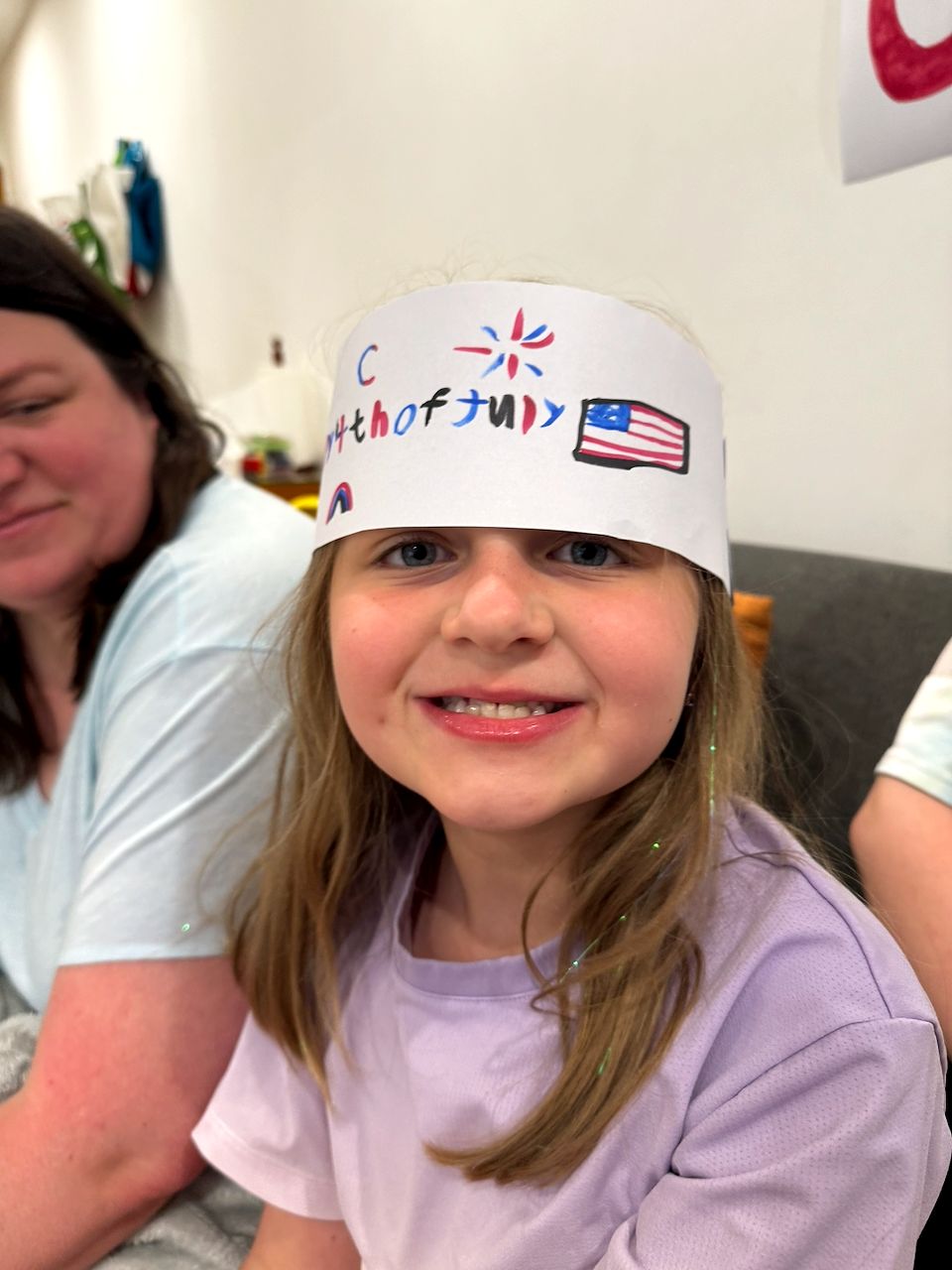
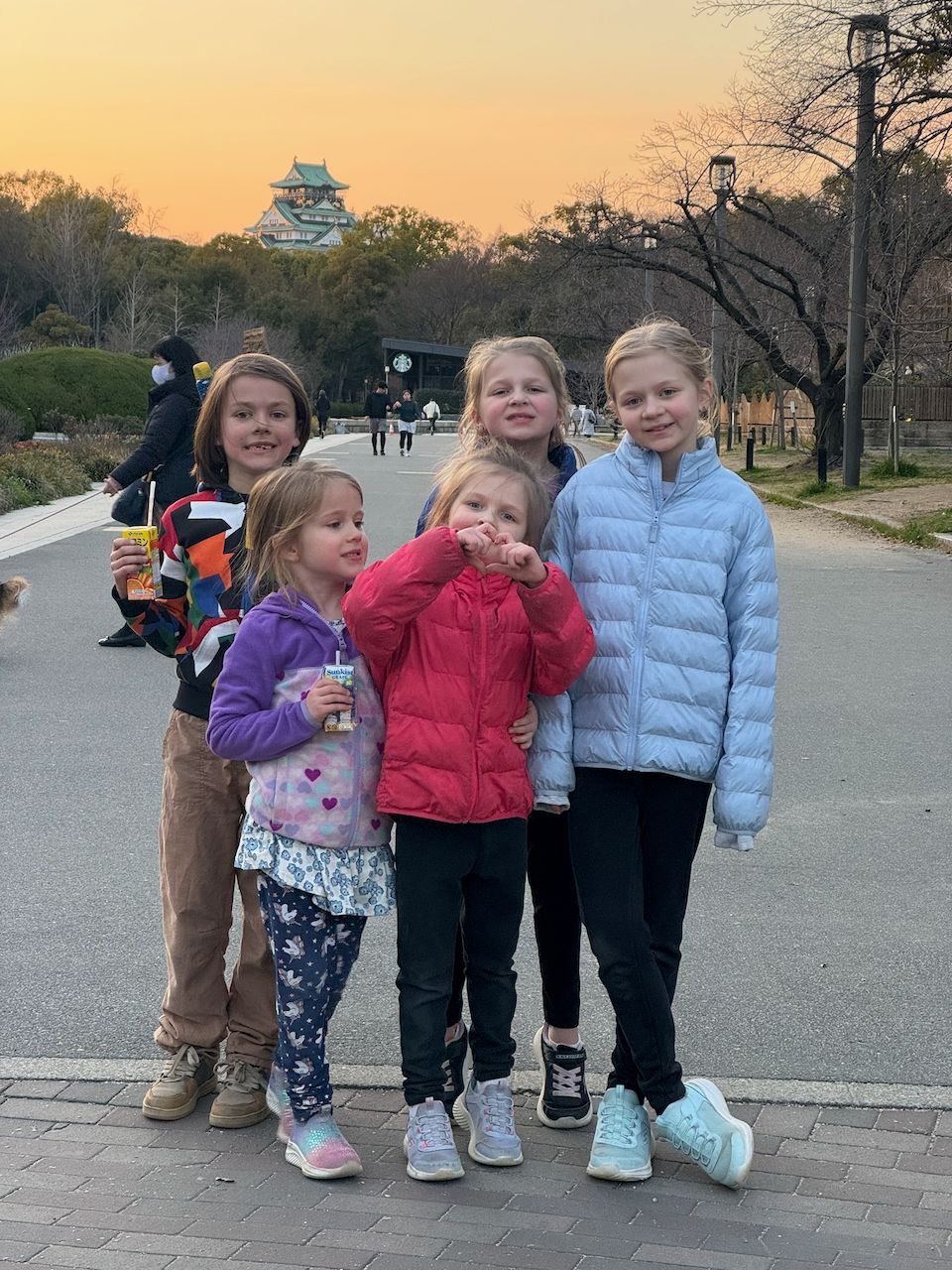
It also looks like a morning where nobody wants to do math and the internet is slow and we're tired of being in transit and the apartment has a weird smell and everyone is irritable. Those days happen. They're not in the Instagram posts but they're in the life.
The thing we'd tell a family considering this: the hard days are not a reason to not do it. They're a reason to be honest about what you're signing up for before you sell the car.
Building the worldschooling community
One of the things nobody prepares you for: the loneliness that can come with constant movement, particularly in the early months before you've built any community. This is real and worth naming.
What we'd suggest: find the worldschooling Facebook groups before you leave. There are several with tens of thousands of active members. Look for worldschooling popup events in cities you're considering. These are organized gatherings of worldschooling families who run structured activities alongside cultural immersion. We attended our first Tokyo Worldschool Popup in 2024 and it was one of the better things we've done for the girls' social development. Seeing ten other families doing the same thing you're doing, in a different place than you expected to see them, is a specific kind of relief.
If you're planning trips through Vietnam, Japan, or Southeast Asia and want family-friendly logistics support, Lindsay is a Fora Travel advisor with deep regional experience. You can reach her at [email protected].
What we'd do differently
Stay longer in each place. We did too much early movement in years one and two, chasing variety when what the kids needed was enough time to make real friends and develop real rhythms. Our Da Nang stretches (we're on our seventh visit now) and our extended Osaka stay have produced more memorable experiences than any fast-moving itinerary.
Start the formal curriculum earlier. We were loose about academic structure in year one because we thought the experiences would carry everything. They carried a lot. They didn't carry multiplication tables. Those required actual deliberate teaching.
Involve the kids in decisions earlier. Lily and Cora have strong opinions about where they want to go and what they want to do, and the trips where they've had input into the planning have been noticeably better for everyone. Harper mostly just wants to find the nearest body of water.
FAQ
Frequently Asked Questions
The questions we get most about worldschooling, four years and 34 countries in.
Worldschooling is homeschooling that uses travel and cultural immersion as the primary educational content. Families learn geography by visiting the places, history by walking through the sites, science by observing ecosystems in different climate zones, and languages by using them in daily life.
Yes. Worldschooling functions as homeschooling under US law, which is legal in all 50 states. Requirements vary by state of residency. Some states require testing or portfolios; others require nothing beyond a notice of intent. You maintain the residency of a state, not the country you're currently in.
Full family costs range widely. A family of five can worldschool comfortably in Southeast Asia for $2,500 to $3,500 per month all-in. Europe runs $4,000 to $6,000. Japan runs $4,500 to $6,500. Compared to private school tuition plus a mortgage back home, the math often favors travel.
Not in our experience or in most families we know, provided you keep math structured. The place we've seen regression is arithmetic fluency when families go fully unschooling. Reading, writing, geography, history, and language skills tend to develop faster than in traditional school. Math needs deliberate daily practice.
Through worldschool popup events, expat communities in extended-stay destinations, activities and classes at each location, and increasingly through online Outschool sessions where they see the same kids weekly across multiple months. Our girls have friends in six countries.
Yes, but it works best when the teenager wants it. Buy-in matters more with older kids. Academic requirements also become more specific as high school approaches, so a structured online program is usually part of the answer.
This post contains affiliate links to Holafly, Outschool, and SafetyWing. If you purchase through our links we may earn a small commission at no extra cost to you. We are not insurance brokers; the SafetyWing mention is informational only and not a recommendation. All opinions are our own.